The best running trails around Épervans
4.4
(235)
4,584
runners
325
runs
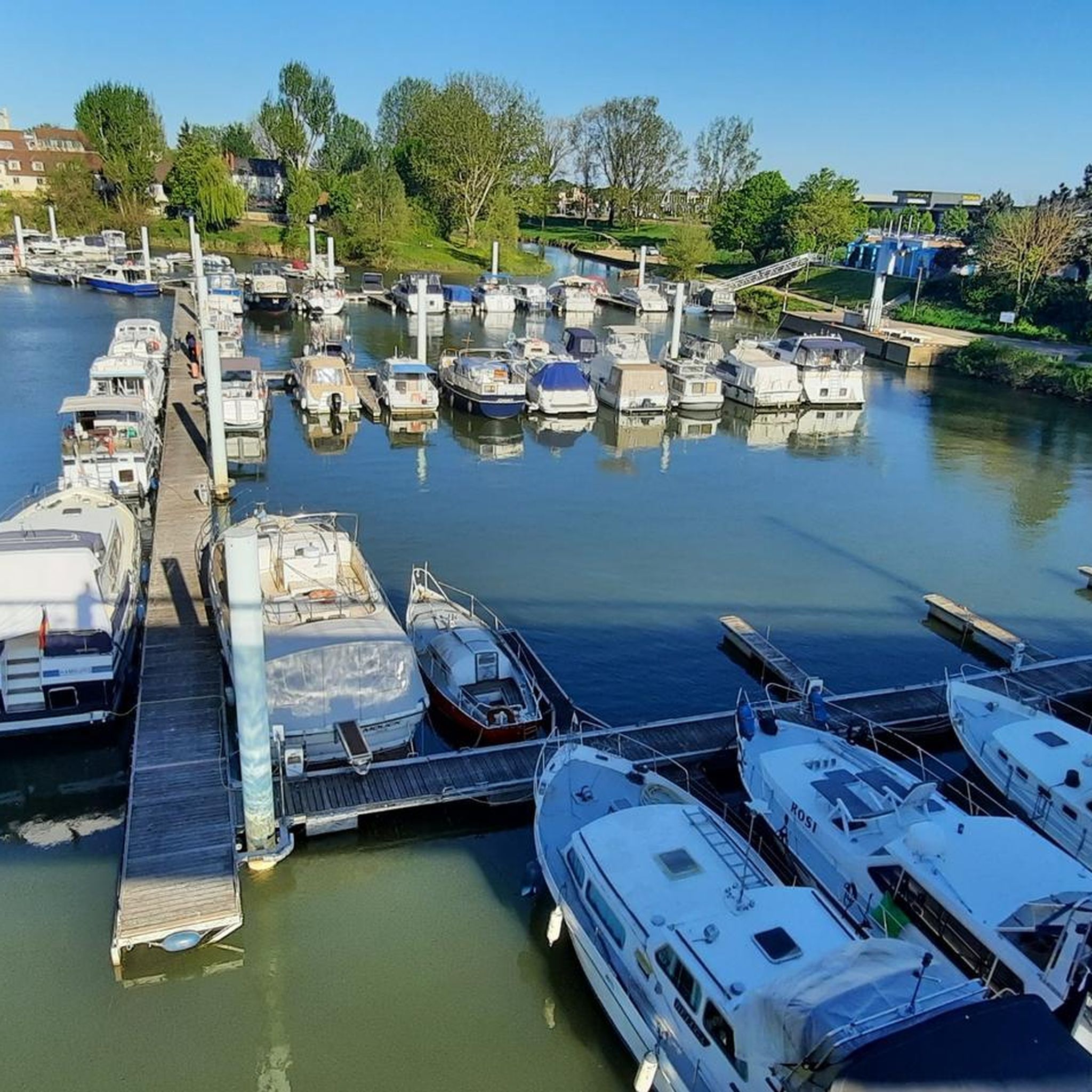
Jogging routes around Épervans traverse a largely flat landscape, characterized by the meandering Saône River and its surrounding fertile plains. The region offers gentle gradients, with minimal elevation changes, making it suitable for various running paces. Runners can expect routes that pass through riverside paths and cultivated areas.
Best jogging routes around Épervans
- The most popular jogging route is Chalon-sur-Saône Rose Garden loop from Saint-Marcel, a 6.1 miles (9.9 km) trail that takes about 1 hour to complete, passing…
Last updated: August 16, 2026
22
runners
Moderate run. Good fitness required. Mostly paved surfaces. Suitable for all skill levels.
12
runners
7.98km
00:51
10m
10m
Moderate run. Good fitness required. Mostly paved surfaces. Suitable for all skill levels.

Sign up for free
9
runners
4.72km
00:29
20m
20m
Easy run. Great for any fitness level. Mostly paved surfaces. Suitable for all skill levels.
7
runners
Moderate run. Good fitness required. Mostly paved surfaces. Suitable for all skill levels.
6
runners
4.35km
00:27
20m
20m
Easy run. Great for any fitness level. Mostly paved surfaces. Suitable for all skill levels.
Get access to more routes and recommendations from other explorers.
Sign up for free
Already have an account?
Our route recommendations are based on thousands of hikes, rides, and runs completed by other people on komoot.
Start today with a free account
Your next adventure awaits.
Login or Signup
Tips from the Community

At the beginning of the 16th century, a hospital was founded on Saint Laurent island. The sisters' building, which is easily recognizable by its stepped gable, still dates from this period. The adjacent building replaced the ward in the 19th century, which was demolished in 1854. The dome was erected around 1770 and heavily rebuilt during the modernization of the hospital (1854-1870).
2
0

The whole city center is worth a visit
0
0

Joseph (called Nicéphore) Niépce, to whom this museum in his birthplace Chalon-sur-Saône is dedicated, was born here on March 7, 1765. He died on July 5, 1833. Norb has already presented Niépce's work in detail in his contribution here. Wikipedia honors him with the words: "He developed heliography, the world's first photographic technique. He took the first photograph that has survived to this day."
2
0

In August 1826, Nicéphore Niépce, a 61-year-old Burgundian living in Saint-Loup-de-Varennes near Chalon-sur-Saône, tested one of these latest inventions and took the first photo in history. Daguerre will buy him or steal his patent, and that is why the first photos will be called daguerreotypes. The museum is very interesting to visit and relates the beginnings of photography to the present day.
5
1

This is a photography museum after Named the photo pioneer Nicephore Niepce. With over three million photos!
2
0

The entrance to the main attraction, the Musée Nicéphore Niépce, is easy to find, as the museum is right on the promenade. The history of photography is explained on the basis of images, devices and devices. You can even admire the very first Niépce equipment. That naturally begs the question, who is the inventor of photography? It's not Louis Daguerre, as is commonly assumed! Nine years after Niépce, he developed the process of making a photograph on a silver-plated copper plate, on which, however, the object was shown reversed and from which no further copies could be made. Niépce succeeded in his first landscape photography after years of experimentation, but almost no one showed any interest in the new achievement, which he called "heliography" (sunlight drawing). The first photograph in the world - and the only one of Niépce that has survived - shows the view from his study not far from Chalon. It takes eight hours of exposure before this view from his room is permanently captured on a metal plate coated with asphalt dust and lavender oil. In 1829, when Niépce ran out of money for further research, he signed a collaboration agreement with the enterprising Louis Daguerre, who commercialized the groundbreaking invention after Niépce died of a stroke in 1833. The daguerreotypes became the first cameras and brought him the fame and economic success that Niépce was not granted. The city of Chalon-sur-Saône has not forgotten the photography pioneer and even goes so far as to let the museum visit for free. The first thing you notice is an old large-format camera; The exhibition is very interesting, there are old Kodak advertising posters, photo equipment, an accumulation of disposable cameras, retorts and chemical bottles and of course some "heliographies". The way back is through a staircase with a spiral staircase and creaking steps.
3
0

Not to leave, is the Museum of Photography
3
2

Chalon is known as the birthplace of photography (heliography). The city's most famous citizen is Joseph Nicéphore Nièpce, for whose invention there is a museum on the Quay des Messageries containing more than 2 million photographs and many artifacts, cameras and other equipment from the history of photography.
4
0
Frequently Asked Questions
How many running routes are available around Épervans?
There are over 300 running routes available around Épervans on komoot, offering a wide variety of options for all skill levels. The region's flat terrain along the Saône River makes it ideal for diverse running experiences.
Are there easy running routes suitable for beginners in Épervans?
Yes, Épervans offers several easy running routes perfect for beginners. For instance, the Running loop from Lans is an easy 4.7 km (2.9 miles) trail with minimal elevation, ideal for a gentle jog.
What kind of terrain can I expect on the running trails in Épervans?
The running trails around Épervans are characterized by largely flat landscapes, with minimal elevation changes. You'll primarily find routes traversing riverside paths along the Saône River and cultivated agricultural areas, offering a smooth running surface.
Are most running routes in Épervans circular, or are there point-to-point options?
Many of the running routes in Épervans are circular loops, which are convenient for starting and ending at the same point. For example, the Running loop from Le Petit Creusot is a moderate 5.9 km (3.7 miles) circular path. While loops are common, you can also plan point-to-point runs by utilizing public transport or arranging a pickup.
Can I bring my dog on the running trails in Épervans?
Generally, dogs are welcome on many of the outdoor trails in the Épervans area, especially on riverside paths and through open fields. However, it's always advisable to keep your dog on a leash, especially near cultivated areas or if wildlife is present, and to check local regulations for specific routes or nature reserves.
What is the best time of year to go running in Épervans?
The spring and autumn months are often ideal for running in Épervans, offering mild temperatures and pleasant scenery. Summer can be warm, so early morning or late evening runs are recommended. Winter running is also possible, given the flat terrain, though paths might be damp or muddy after rain.
Are there any interesting landmarks or attractions I can see along the running routes?
Yes, many running routes offer views of local landmarks. You might pass through or near the historic city of Chalon-sur-Saône, with its charming Rue du Chatelet and the impressive Saint Vincent Cathedral. The Nicéphore Niépce Museum is also nearby, offering cultural insights.
What do other runners enjoy the most about jogging in Épervans?
The running routes in Épervans are highly rated by the komoot community, with an average score of 4.3 stars from over 170 reviews. Runners frequently praise the peaceful riverside paths, the flat and accessible terrain, and the scenic views of the Saône River and surrounding countryside.
Are there any longer running trails for experienced runners looking for a challenge?
While the region is largely flat, experienced runners can combine several routes or explore longer sections along the Saône River to create extended runs. The existing routes, such as the moderate ones around Saint-Marcel, can be linked to form longer distances, offering continuous riverside running.
What kind of wildlife might I encounter while running in Épervans?
Running along the Saône River and through the surrounding plains, you might spot various bird species, including waterfowl. The agricultural landscapes can also be home to small mammals. Early morning or late evening runs often provide the best opportunities for wildlife observation.
Are the running paths in Épervans suitable for families with children?
Yes, the generally flat and well-maintained paths along the Saône River are very suitable for families. The minimal elevation changes make them accessible for children, and many routes offer pleasant, safe environments away from heavy traffic. Shorter loops are ideal for family outings.
Most popular attractions around Épervans

Get inspired with the komoot mobile app


Explore more
Browse the best Running Trails & Routes in other regions.
