Attractions and Places To See around Sains-En-Gohelle - Top 20
Best attractions and places to see around Sains-En-Gohelle include a mix of historical sites and natural landscapes shaped by its coal mining heritage. The area features rehabilitated slag heaps, known as terrils, which have been transformed into green spaces for recreation. Significant landmarks such as historical churches and former mining towns offer insights into the region's past. Sains-En-Gohelle provides opportunities to explore both cultural heritage and unique natural features.
Best attractions and places to see around Sains-En-Gohelle
- The most popular…
Last updated: October 9, 2026
Canadian National Vimy Memorial
Highlight (Segment) • Monument
Translated by Google •
Tip by

The Caucourt Ford and Watermill
Highlight • Monument
Translated by Google •
Tip by

Sign up now to discover places like this
Get recommendations on the best single tracks, peaks, & plenty of other exciting outdoor places.
Notre-Dame-de-Lorette National Cemetery
Highlight • Historical Site
Translated by Google •
Tip by

The Church of Ablain-Saint-Nazaire
Highlight • Historical Site
Showing Translation
Tip by

Towards the Canadian trenches of Vimy
Highlight • Monument
Translated by Google •
Tip by
Sign up for free to discover even more attractions around Sains-En-Gohelle.
Already have an account?
Start today with a free account
Your next adventure awaits.

Tips from the Community

Magnificent memorial. The site as a whole is pleasant and rather touristy.
0
0

The ruins of the old church of Ablain-Saint-Nazaire are an impressive and symbolic remnant of the First World War. This church, built in the 16th century in flamboyant Gothic style by Jacques Le Caron, was heavily damaged during the fighting in 1915. The ruins have been preserved as a monument to commemorate the horrors of war.
7
0
A remarkable story about the Canadian trenches concerns the preparations for the attack on Vimy Ridge in April 1917. The Canadian divisions used an underground quarry and created additional corridors towards the front. These tunnels and trenches played a crucial role in the success of the attack, with the Canadians managing to retake the strategically important ridge in just three days.
7
0
A remarkable story about the ruins concerns the decision not to rebuild the church after the war. Although the church had been classified as a historical monument in 1908, the Commission for Historical Monuments decided that the ruins should remain as a testimony to the German destruction. Ironically, it was the French guns that had destroyed the church, but the ruins became a symbol of the war and the reconstruction.
6
0
The Nécropole nationale de Notre-Dame-de-Lorette is one of the largest and most impressive military cemeteries in France. Situated on a hill in Ablain-Saint-Nazaire, this cemetery contains the graves of more than 42,000 soldiers who died during the First World War. The cemetery was inaugurated in 1925 and includes a basilica, a tower-lantern and a museum.
7
2

The church dedicated to the Mother of God under the title "Notre-Dame de Lorette" rises in brilliant white and is visible from far away. But the brilliant impression is deceptive, at the latest when the visitor to the site realizes that they are in a huge military cemetery. Around 20,000 individual graves and a further 23,000 victims of war and tyranny buried in ossuaries are deeply disturbing.
3
0
Such places are still very important today as memorials to the countless war dead. "Now, Lord, you let your servant depart in peace, as you have said..." says the so-called "Hymn of Simeon" (Luke's Gospel, Chapter 2, Verse 29). However, the many people buried here did not depart in peace, but became victims of war and an inhuman tyranny. The most important and at the same time everlasting function of the military or honorary cemeteries or war graves is therefore to keep the memory of this suffering alive and - every generation anew (!) - to remind them of the need to maintain peace in the long term.
0
0

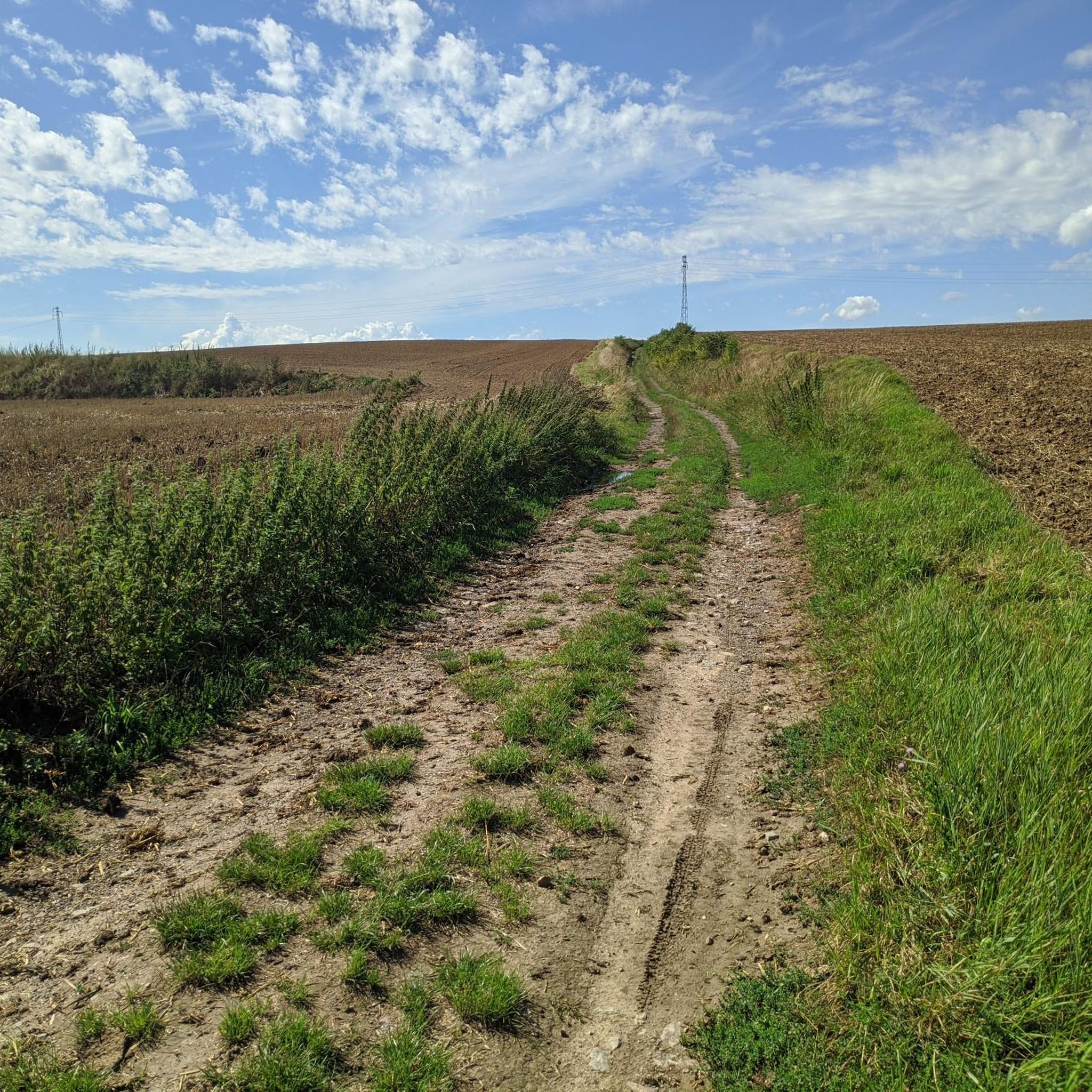
This hike takes private paths... To avoid ending up with a complaint filed
1
0
Frequently Asked Questions
What historical sites can I visit around Sains-en-Gohelle?
The region is rich in history, particularly related to World War I and its mining heritage. You can explore the solemn grounds of Notre-Dame-de-Lorette National Cemetery, one of France's largest military cemeteries, or visit the impressive Canadian National Vimy Memorial. The ruins of The ruined church of Ablain-Saint-Nazaire also stand as a poignant reminder of the war. Beyond the war, the Cité 10, a former mining town, offers insight into the region's industrial past and is part of the UNESCO World Heritage site.
Are there any natural features or unique landscapes to explore?
Yes, the area is known for its transformed natural landscapes, particularly the rehabilitated terrils (slag heaps) from the coal mining era. These man-made hills have been rewilded into green spaces, offering unique ecosystems and opportunities for hiking and cycling. While specific large natural parks are not within Sains-en-Gohelle itself, the broader Hauts-de-France region features regional natural parks like Parc Naturel Régional Scarpe-Escaut, providing diverse natural outings.
What outdoor activities can I do near Sains-en-Gohelle?
The region is well-suited for various outdoor activities. You can find numerous routes for hiking, running, and gravel biking. For instance, there are several moderate running loops starting from Sains-en-Gohelle, and a range of hiking trails, including moderate to difficult options like the 'Small natural arch – Mont de Justice loop'. You can discover more routes for these activities on the dedicated guides for running, gravel biking, and hiking around Sains-en-Gohelle.
Are there family-friendly attractions in the area?
Many of the historical sites are suitable for families, offering educational experiences. Both the Canadian National Vimy Memorial and Notre-Dame-de-Lorette National Cemetery are listed as family-friendly, providing opportunities for reflection and learning about history. The rehabilitated terrils also offer gentle paths for family walks and exploration in nature.
What is the best time to visit Sains-en-Gohelle for outdoor activities?
While specific seasonal recommendations are not available, the region's outdoor activities, particularly hiking and cycling on the terrils, are generally enjoyable during spring, summer, and autumn when the weather is milder. These seasons allow for comfortable exploration of both the natural landscapes and historical sites.
Where can I find unique cultural landmarks in Sains-en-Gohelle?
Within Sains-en-Gohelle, the 16th-century Church of Saint-Vaast is a significant historical landmark. Additionally, the 18th-century Chapelle Sainte-Apolline, located in Bacon Park, offers a glimpse into local religious heritage. The Cité 10, a former mining town, also provides a unique cultural experience, showcasing the architectural and urban planning of mining communities.
What do visitors enjoy most about the attractions around Sains-en-Gohelle?
Visitors particularly appreciate the blend of historical significance and natural beauty. Highlights like The Caucourt Ford and Watermill are described as 'magical places' with options to cross the river or enjoy a meal. The war memorials, such as the Canadian National Vimy Memorial, are noted for their impressive scale and profound historical impact, inviting reflection on the past.
Are there any specific trails or viewpoints I should look for?
The rehabilitated terrils offer excellent opportunities for trails and viewpoints, providing panoramic views of the surrounding landscape, which was once dominated by mining. While specific named viewpoints are not detailed, the elevated positions of these terrils naturally serve this purpose. For hiking, routes like 'Panorama over the marshes – Panorama of the slag heaps loop' near Nœux-les-Mines are available.
Can I find places to eat or drink near the attractions?
Yes, some attractions offer amenities. For example, The Caucourt Ford and Watermill has the option to eat there. In the wider region, larger towns like Lens, Béthune, and Arras, which are conveniently located near Sains-en-Gohelle, offer a broader selection of cafes, pubs, and restaurants.
What is the significance of the Cité 10 in Sains-en-Gohelle?
The Cité 10 is a significant former mining town dating from the 1920s, originally attached to Mine No. 10 of the Compagnie des mines de Béthune. It is integrated into the Nord-Pas de Calais Mining Basin UNESCO World Heritage site, showcasing the unique urban, landscape, and architectural qualities of the housing complexes built by mining companies. The remains of its entrance gates on Avenue François Mitterrand are a testament to its past.
Are there any religious sites of interest?
Yes, the region has several religious sites. The 16th-century Church of Saint-Vaast in Sains-en-Gohelle is a key historical landmark. Additionally, the 18th-century Chapelle Sainte-Apolline in Bacon Park holds local historical and religious significance. The Notre-Dame-de-Lorette National Cemetery also includes a basilica and a tower-lantern, serving as a place of remembrance and religious reflection.
What is the history behind the Canadian presence at Vimy?
The Canadian National Vimy Memorial commemorates the 11,169 Canadian soldiers who died in France during the First World War and have no known grave. The area, including the Canadian trenches of Vimy, was the site of the Battle of Vimy Ridge in April 1917, a crucial victory for the Canadian divisions. The memorial and preserved trenches serve as a powerful reminder of their courage and sacrifice.
Most popular routes around Sains-En-Gohelle
Most popular attractions around Sains-En-Gohelle

Get inspired with the komoot mobile app


Explore more
Still not found the Highlight you’re looking for? See guides of the top attractions in other regions:
