The best running trails around Roclincourt
4.5
(204)
15,876
runners
608
runs
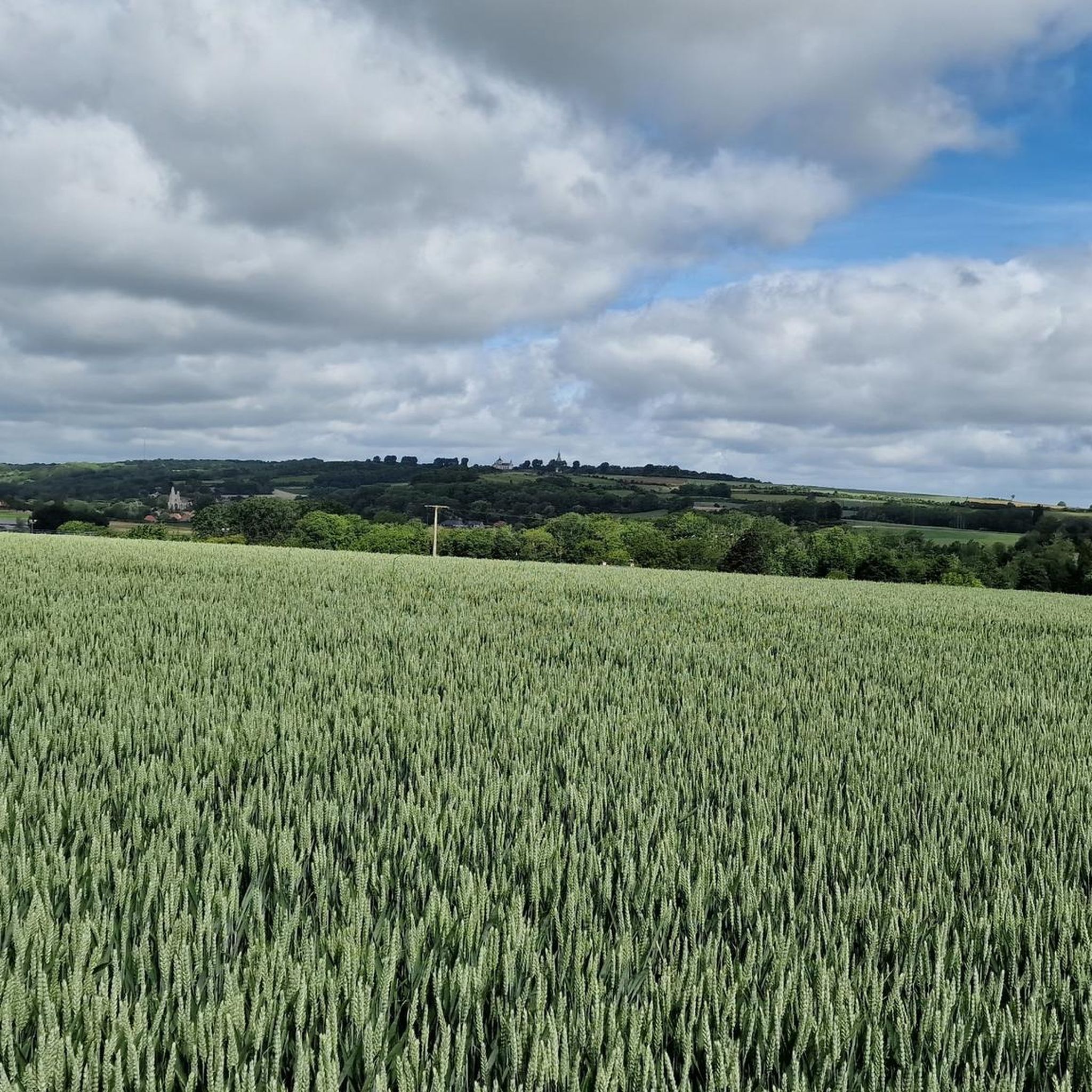
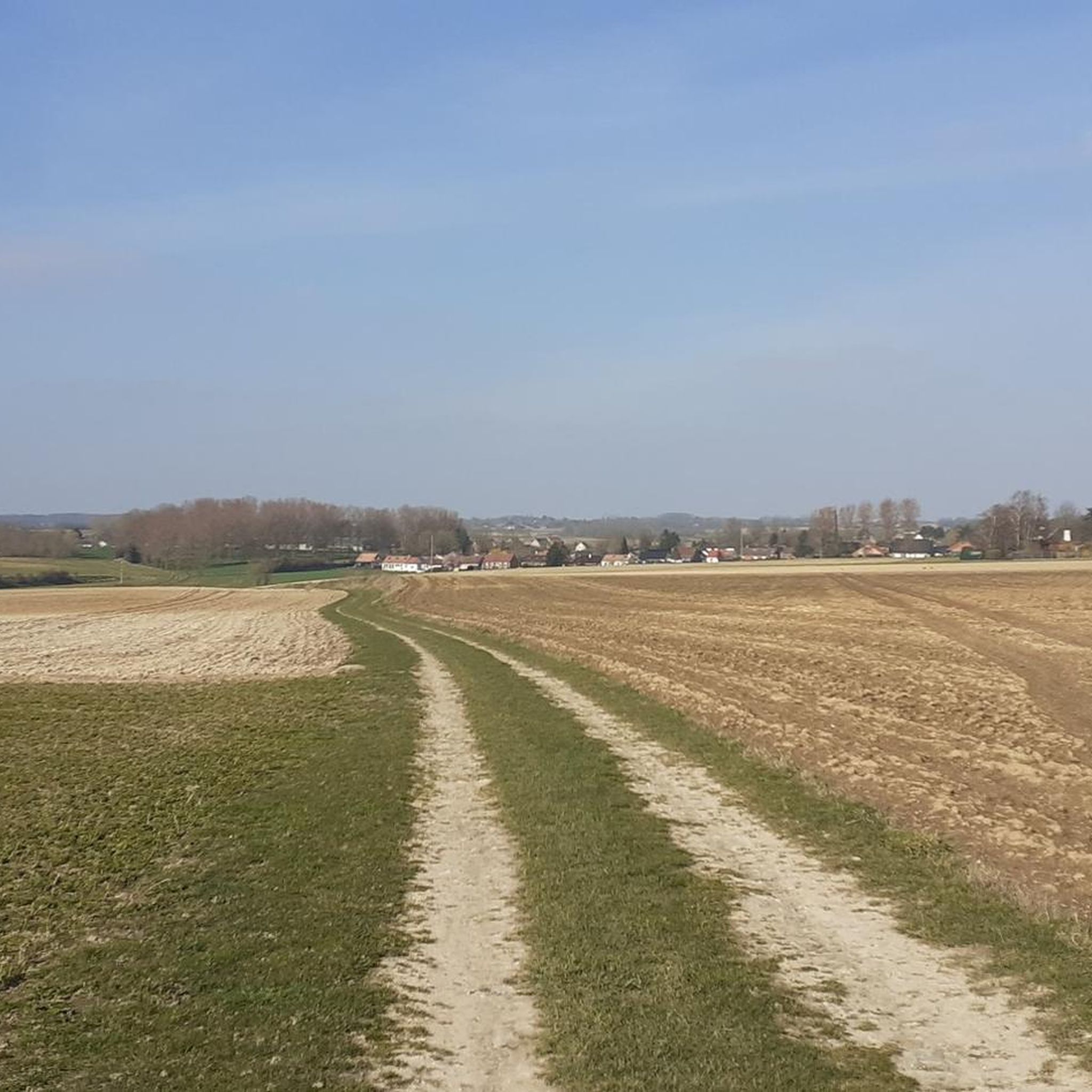
Jogging around Roclincourt offers access to diverse landscapes and historical sites in the Pas-de-Calais department of France. The region features green spaces and natural reserves, providing varied ecosystems and scenic backdrops for running. Terrain includes wooded paths and areas with varying elevation, suitable for different running preferences. Historical landmarks, such as World War I memorials, can also be incorporated into jogging routes.
Best jogging routes around Roclincourt
- The most popular jogging route is Running loop from Thélus, an 8.1…
Last updated: June 26, 2026
4.0
(1)
88
runners
13.2km
01:25
110m
110m
Moderate run. Good fitness required. Mostly paved surfaces. Suitable for all skill levels.
14
runners
8.95km
00:56
50m
50m
Moderate run. Good fitness required. Mostly paved surfaces. Suitable for all skill levels.

Sign up for free
7
runners
9.04km
00:56
50m
50m
Moderate run. Good fitness required. Mostly paved surfaces. Suitable for all skill levels.
11
runners
18.5km
01:57
140m
140m
Hard run. Very good fitness required. Mostly paved surfaces. Suitable for all skill levels.
7
runners
19.3km
02:01
130m
130m
Hard run. Very good fitness required. Mostly paved surfaces. Suitable for all skill levels.
Get access to more routes and recommendations from other explorers.
Sign up for free
Already have an account?
Our route recommendations are based on thousands of hikes, rides, and runs completed by other people on komoot.
Start today with a free account
Your next adventure awaits.
Login or Signup



Tips from the Community

Located right next to the monument, the historical interpretation center presents the Battle of Vimy Ridge in two ways. First, you can discover an exhibition with diagrams, photographs, maps, and some exhibits. You'll learn about the historical context from a political and military perspective, with numerous images showing the lunar landscapes of the trench line and No Man's Land. Books about the Battle of Vimy Ridge are also available for purchase at the reception desk. Next, a superb Sound & Light show, using period videos, recounts the preparation for the offensive, the fighting, the advance of the troops, and the lives of soldiers during the battle. A video table and televisions allow you to relive these moments. Commentary is available in French, English, and German.
0
0

A remarkable story about the Canadian trenches concerns the preparations for the attack on Vimy Ridge in April 1917. The Canadian divisions used an underground quarry and created additional corridors towards the front. These tunnels and trenches played a crucial role in the success of the attack, with the Canadians managing to retake the strategically important ridge in just three days.
7
0
A remarkable story about the Vimy Memorial concerns its unveiling in 1936. More than 50,000 people, including 6,200 Canadians, attended the ceremony. The presence of so many veterans and survivors underscored the profound impact of the war and the enduring bond between Canada and France. The memorial has since become a symbol of Canadian courage and sacrifice.
6
0
The Mémorial national du Canada à Vimy is an impressive war memorial, commemorating the members of the Canadian Expeditionary Force who died during the First World War. The memorial, designed by Walter Seymour Allward, was unveiled on 26 July 1936 by King Edward VIII. It commemorates the 11,169 Canadian soldiers who died in France and have no known grave.
7
0
A special story about the monument concerns the two colonels, Pein and Cros, who were both killed during the division's actions in May 1915. Their names are inscribed on the monument, along with an inscription commemorating the courage and determination of the soldiers: "Aux morts de la division marocaine, sans peur, sans pitié". This tribute emphasises the heavy losses and heroic efforts of the Moroccan Division during the battle.
7
0
The Monument à la Division Marocaine in Givenchy-en-Gohelle commemorates the courage and sacrifice of the Moroccan Division during the First World War. This monument was erected in honour of the breakthrough made by the division during the Battle of Artois on 9 May 1915. The Moroccan Division, led by General Georges Louis Humbert, played a crucial role in breaking through the German lines and capturing strategic terrain.
8
0
Within the 107 hectares of the Vimy Ridge National Historic Site of Canada, near the grandiose memorial erected in honor of the 66,000 Canadian soldiers who died in the Great War, a more modest building is dedicated "to the memory (...) of the officers, non-commissioned officers, and soldiers of the Moroccan Division who fell gloriously here on May 9, 10, and 11, 1915." Before the Canadians captured Vimy Ridge from the Germans in April 1917, other soldiers had already set foot there but were unable to hold their ground due to a lack of reinforcements and sufficient artillery support. These "forerunners" were the Moroccan Zouaves and riflemen, wearing red chechias and baggy trousers, accompanied in the Moroccan Division by Foreign Legion volunteers from 52 countries. To the men of the Moroccan Division who set out to assault Vimy Ridge On the morning of May 9, 1915, they broke through the German lines, crossed Folie Wood, and approached Vimy Ridge. To monitor their advance and adjust artillery fire, squares of white cloth were sewn to their backs, making them prime targets for the Germans on their flank. Furthermore, the artillery was running low on ammunition, and reinforcements were not forthcoming: the order to withdraw came with the evening. The Moroccan soldiers were forced to abandon the conquered ground at the cost of heavy losses. The riflemen of the Moroccan Division were among the approximately 820,000 men mobilized in the French colonies or protectorates during the First World War, including 636,000 sent to France as soldiers or laborers. Among the 449,000 engaged in the fighting, the majority came from Algeria (150,000) and the others from sub-Saharan Africa (135,000), Indochina (43,000), Tunisia (39,000), Morocco (34,000). 70,000 of them died on French soil.
0
0

The Canadian National Vimy Memorial (Vimy, Pas-de-Calais department) is a memorial dedicated to those who were missing or killed in World War I in the Canadian Expeditionary Force. The monument is located on the site of a well-preserved or partially reconstructed battlefield, including trenches and tunnels. Guided tours are offered in French and English, there are several memorials, a permanent and a temporary exhibition, a museum shop and a marked hiking trail that conveys the history of the site.
0
0
Frequently Asked Questions
How many running routes are available around Roclincourt?
There are over 600 running routes documented around Roclincourt, catering to various preferences and fitness levels. The komoot community has explored these trails extensively, with more than 16,000 runners using the platform to discover the area.
What kind of terrain can I expect on the running trails near Roclincourt?
The running trails around Roclincourt offer diverse terrain, including wooded paths and areas with varying elevation. The broader Pays d'Artois region is known for its unspoiled nature, providing a mix of natural trails and potentially some paved sections, suitable for different running experiences.
Are there running routes suitable for beginners in the Roclincourt area?
Yes, Roclincourt offers a good selection of routes for beginners. Out of over 600 routes, 56 are classified as easy, providing a gentle introduction to running in the region. These routes typically feature less elevation gain and shorter distances.
What do other runners say about the trails in Roclincourt?
The running routes in Roclincourt are highly rated by the komoot community, with an average score of 4.5 stars from over 190 reviews. Runners often praise the varied terrain, the blend of natural beauty with historical sites, and the well-documented paths available.
Can I combine my run with exploring historical sites or natural features in Roclincourt?
Absolutely! Roclincourt and its surroundings are rich in historical significance, particularly related to World War I. You can incorporate landmarks like the Canadian National Vimy Memorial or the Notre-Dame-de-Lorette National Cemetery into your run. The region also features natural highlights such as the Marais de Maroeuil.
Are there any specific viewpoints or natural monuments to look out for on the running paths?
Yes, several natural and historical monuments offer interesting sights. You might encounter the Vimy Ridge Shell Craters, the Vimy Foundation Centennial Park, or the Sainte-Bertille Spring. These spots provide unique points of interest along your running journey.
Are there family-friendly running paths around Roclincourt?
While specific 'family-friendly' designations aren't always available, many of the 56 easy-rated routes around Roclincourt are suitable for families. These paths typically have gentler gradients and shorter distances, making them enjoyable for all ages. Consider routes that pass through parks or less challenging natural areas.
Are the running trails around Roclincourt dog-friendly?
Generally, many natural trails in the Roclincourt region are dog-friendly, especially those in green spaces and less populated areas. However, it's always advisable to keep dogs on a leash, particularly near historical sites or in nature reserves, and to check local regulations for specific areas you plan to visit.
Is parking available near the running trailheads in Roclincourt?
Yes, parking is generally available near many of the starting points for running routes in and around Roclincourt. Villages like Thélus and Sainte-Catherine, which are common starting points for popular loops, typically offer public parking options. It's recommended to check specific route details for precise parking information.
How can I reach the running routes around Roclincourt using public transport?
Roclincourt is a village, so direct public transport links to every trailhead might be limited. However, the nearby city of Arras, which is a starting point for routes like Running loop from Arras, is well-served by public transport. From Arras, you may find local bus services or taxis to reach specific starting points further afield.
Are there circular running routes available in Roclincourt?
Yes, many of the running routes in the Roclincourt area are circular, offering convenient start and end points in the same location. Examples include the Running loop from Roclincourt, which is a moderate 9.9 km trail, and the Running loop from Arras.
What is the best time of year to go running in Roclincourt?
The spring and autumn months are generally ideal for running in Roclincourt. During these seasons, the weather is typically mild, and the natural landscapes are particularly beautiful, with blooming flora in spring and vibrant colors in autumn. Summer can also be pleasant, especially in the mornings or evenings, while winter runs might require more preparation for colder conditions.
Are there any cafes or pubs near the running routes in Roclincourt?
While Roclincourt itself is a smaller village, the surrounding towns and villages, especially those like Arras, offer a variety of cafes, pubs, and restaurants where you can refuel after your run. Some routes might pass close to amenities in smaller communities, but it's always a good idea to check in advance if you plan to stop for refreshments.
Most popular routes around Roclincourt
Most popular attractions around Roclincourt

Get inspired with the komoot mobile app


Explore more
Browse the best Running Trails & Routes in other regions.
