Attractions and Places To See around Beauchamps - Top 20
Best attractions and places to see around Beauchamps include significant coastal natural monuments and historical sites. This region, located in France, offers diverse landscapes characterized by dramatic chalk cliffs and sandy beaches. Visitors can explore a mix of natural beauty and architectural heritage, reflecting the area's history and geography. The attractions provide insight into both the geological formations and the cultural development of the French coastline.
Best attractions and places to see around Beauchamps
- The most popular attractions is La…
Last updated: October 5, 2026
Belle Époque Houses of Mers-les-Bains
Highlight • Historical Site
Showing Translation
Tip by

Ault Chalk Cliffs
Highlight • Natural Monument
Translated by Google •
Tip by

Sign up now to discover places like this
Get recommendations on the best single tracks, peaks, & plenty of other exciting outdoor places.
Saint Martin's Church
Highlight • Other
Translated by Google •
Tip by
La Cise Cliff
Highlight • Natural Monument
Translated by Google •
Tip by

Cliffs of Ault
Highlight • Natural Monument
Even if the city has lost its splendor, the site is impressive, because to the north, the plain of …
Translated by Google •
Tip by

Sign up for free to discover even more attractions around Beauchamps.
Already have an account?
Start today with a free account
Your next adventure awaits.

Tips from the Community


The current church, built in 1928 in the Romanesque-Byzantine style, is located in the oldest quarter of the city. It has a Latin cross plan, oriented northwest and southwest. The roof is slate, and the nave is covered with long sides and open gables. It features flamboyant stained-glass windows, a listed 17th-century altarpiece, and a Saint Martin's effigy.
0
0

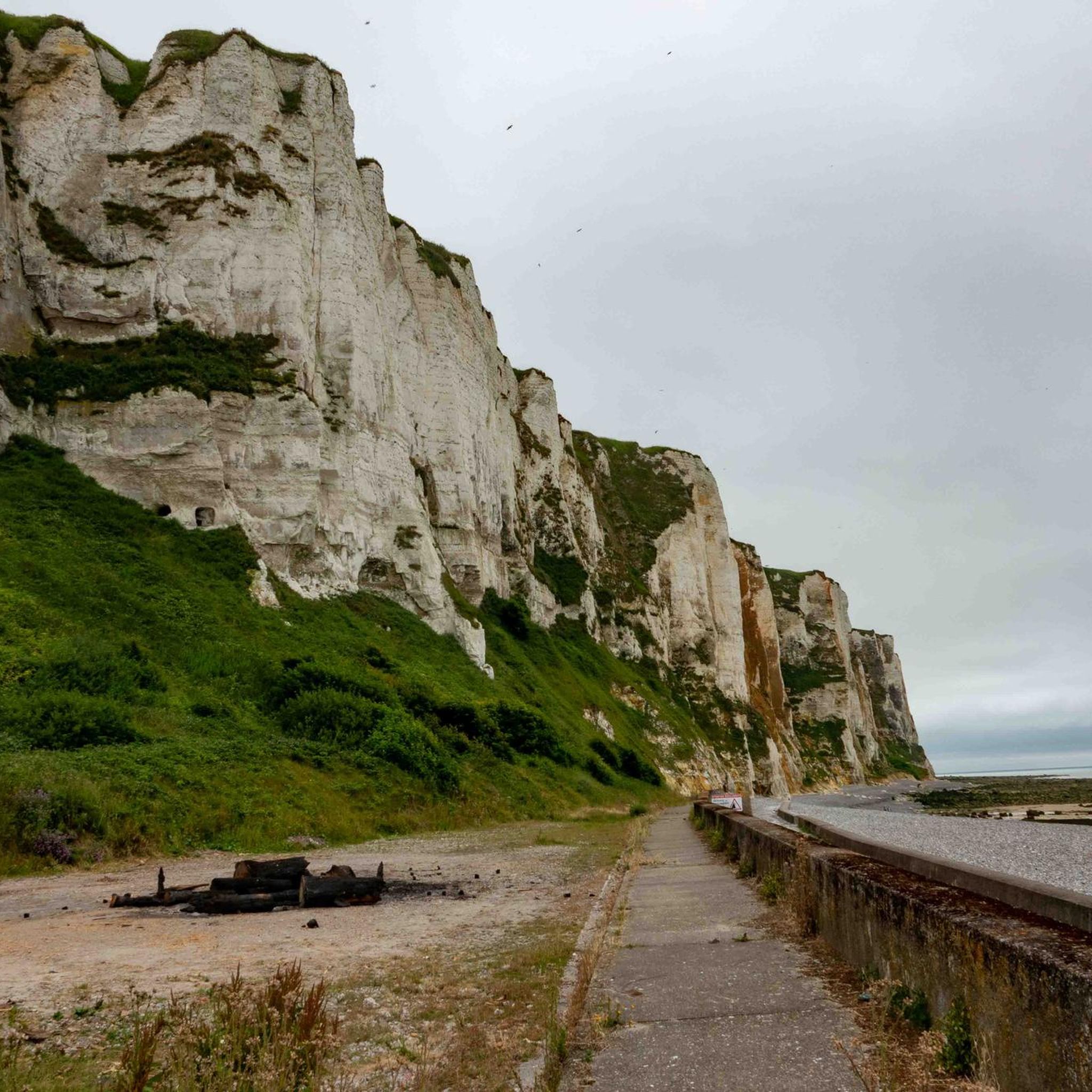
The cliffs are made of chalk and are impressive to look at.
3
0
Here in Ault begin the chalk cliffs, which stretch all the way to Normandy and repeatedly appear as enormous cliffs.
4
0
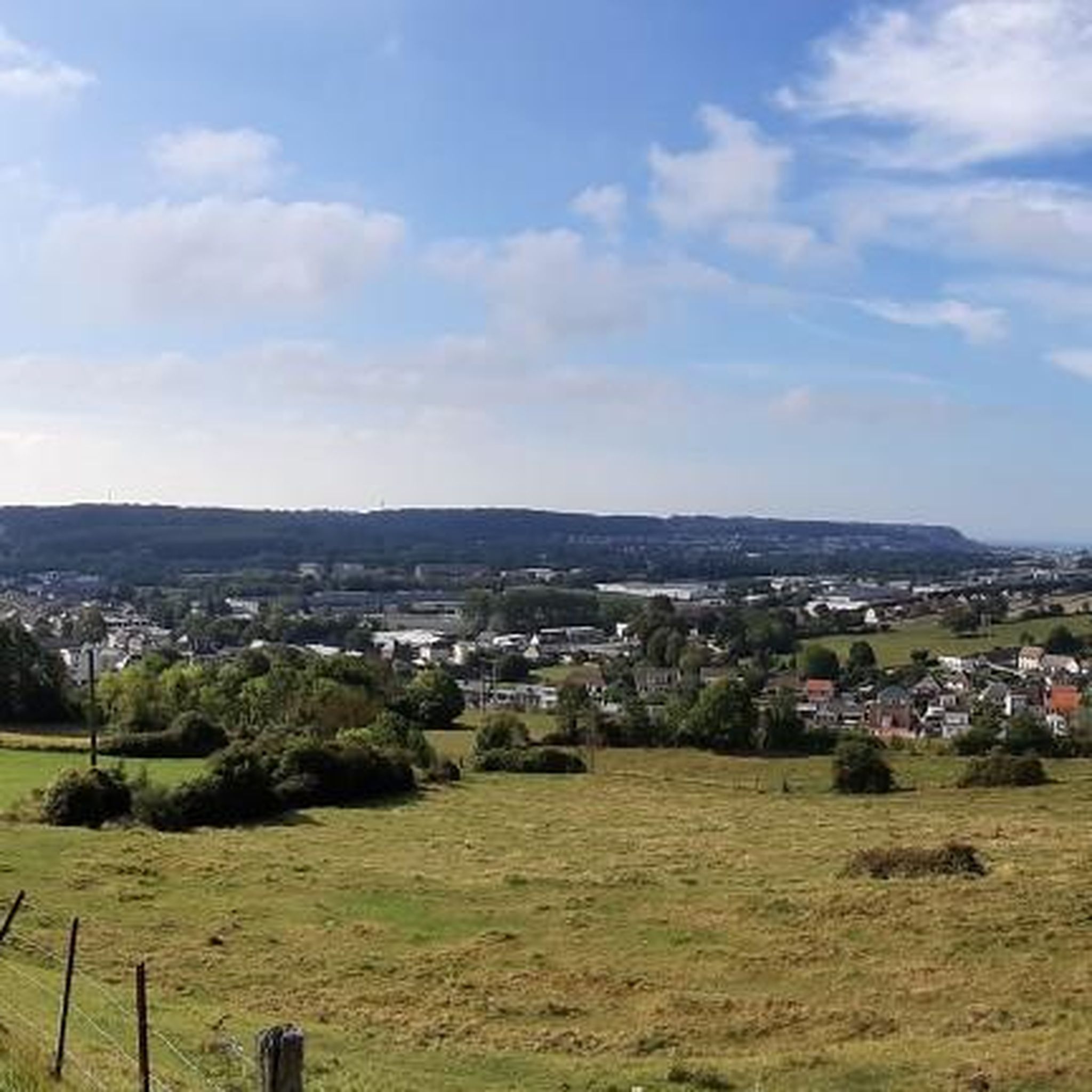
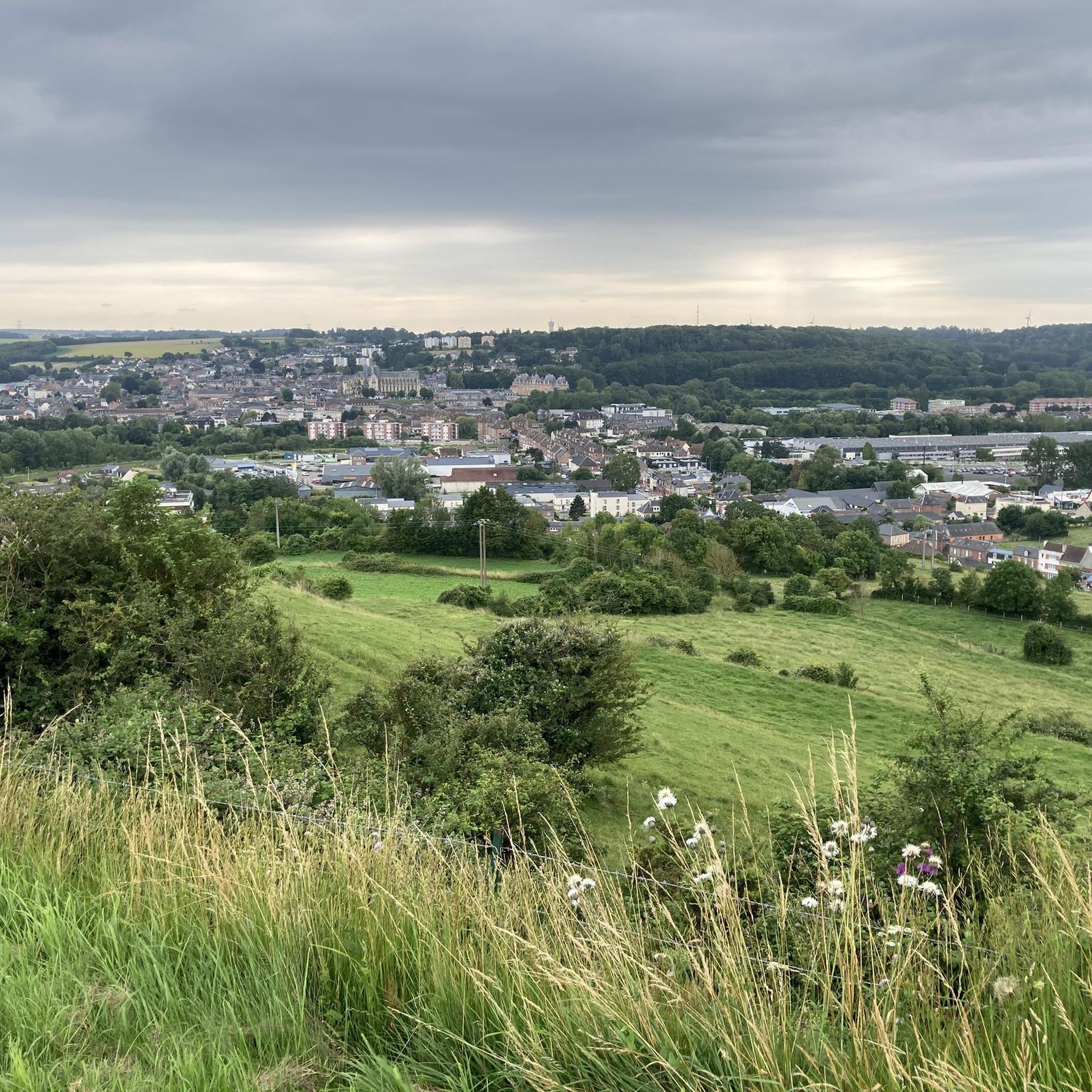
The church is located in the oldest part of the city. From here, you can enjoy a magnificent view of the city.
4
0


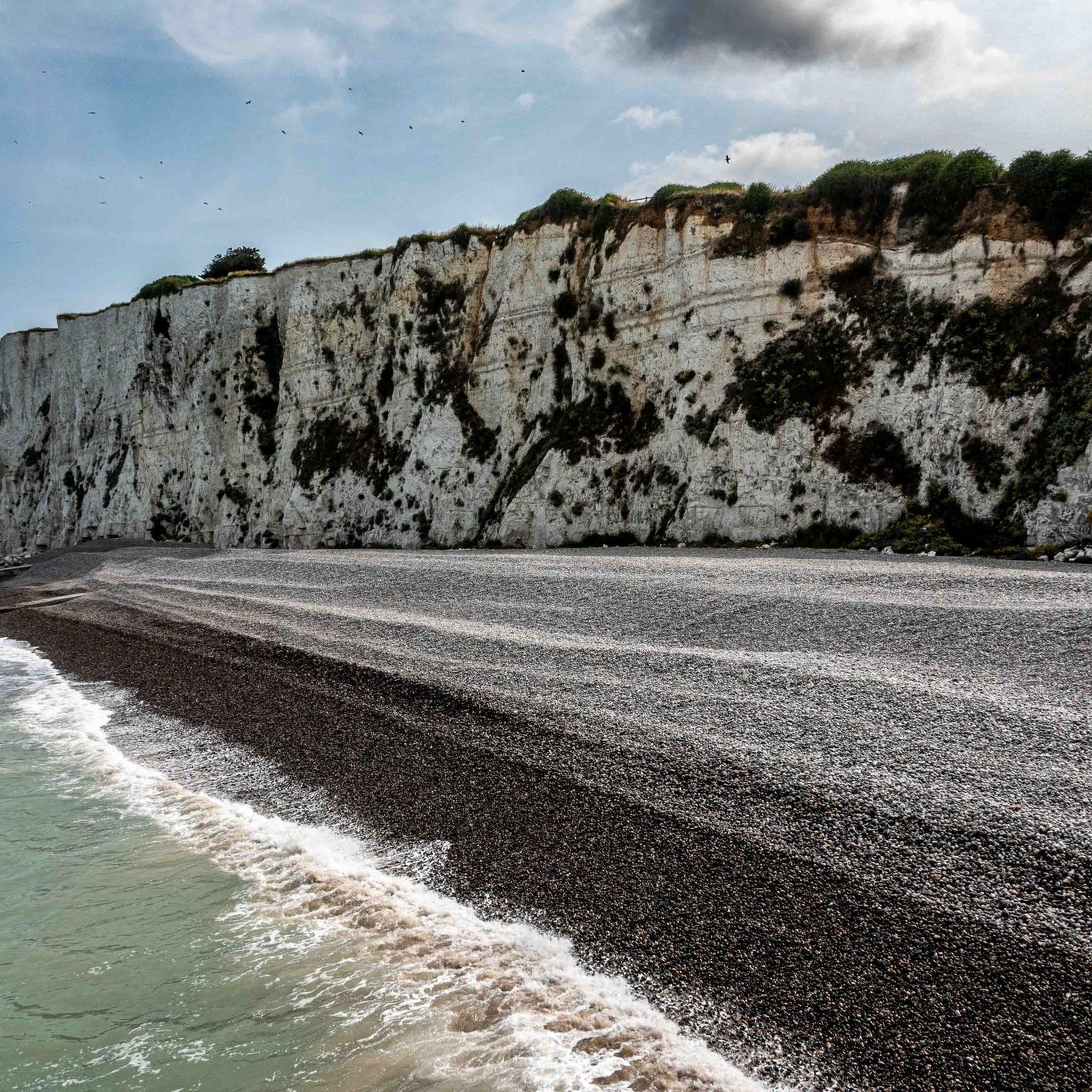
The cliffs around the beach of Ault are composed of chalk from the Upper Cretaceous, more precisely from the Turonian and Coniacian (around 83 million years ago to 90 million years ago). They are strewn with flint nodules which highlight the subhorizontal stratification planes (the formation of flint has already been discussed in Discovery of the geology of the cliffs of Étretat, presentation of an excursion from the beach of Tilleul (Antifer) to the Porte d'Amont (Étretat Nord)). The relative proportion of chalk and flint is around 90-95% chalk to 5-10% flint. Flint horizons are stratigraphic markers. On the cliffs of Ault, the regular flint band called Seven Sisters is recognizable and characterizes the boundary between the Middle Coniacian and the Upper Coniacian (around 87 million years ago). The boundary between the lower and middle Coniacian is marked by the Shoreham 2 marl level, which is more difficult to identify. These lithostratigraphic markings allow in particular the correlation of distant deposits, such as between the Normandy and Picardy coasts, or between the French and English coasts.
3
0
The cliffs around the beach of Ault are composed of chalk from the Upper Cretaceous, more precisely from the Turonian and Coniacian (around 83 million years ago to 90 million years ago). They are strewn with flint nodules which highlight the subhorizontal stratification planes (the formation of flint has already been discussed in Discovery of the geology of the cliffs of Étretat, presentation of an excursion from the beach of Tilleul (Antifer) to the Porte d'Amont (Étretat Nord)). The relative proportion of chalk and flint is around 90-95% chalk to 5-10% flint. Flint horizons are stratigraphic markers. On the cliffs of Ault, the regular flint band called Seven Sisters is recognizable and characterizes the boundary between the Middle Coniacian and the Upper Coniacian (around 87 million years ago). The boundary between the lower and middle Coniacian is marked by the Shoreham 2 marl level, which is more difficult to identify. These lithostratigraphic markings allow in particular the correlation of distant deposits, such as between the Normandy and Picardy coasts, or between the French and English coasts.
2
0
Frequently Asked Questions
What natural features and viewpoints can I explore around Beauchamps?
The region around Beauchamps is renowned for its dramatic coastal landscapes. You can visit La Cise Cliff, which features stunning white chalk cliffs overlooking the turquoise sea. Another impressive natural monument is the Ault Chalk Cliffs, marking the beginning of the Normandy cliffs and offering expansive coastal views. Both provide excellent viewpoints.
Are there any unique architectural sites to visit near Beauchamps?
Yes, the Belle Époque houses of Mers-les-Bains are a must-see. This historical district features around 300 villas built in the Art Nouveau style, characterized by colorful facades and ornate details. These houses were largely designated as a remarkable heritage site in 1986.
What historical sites are there to visit around Beauchamps?
Beyond the Belle Époque houses of Mers-les-Bains, you can also visit Saint Martin's Church in Mers-les-Bains. This Roman-Byzantine style church, built in 1928, houses a 17th-century altarpiece and vibrant stained-glass windows.
Are there family-friendly attractions around Beauchamps?
The Belle Époque houses of Mers-les-Bains are tagged as family-friendly, offering an interesting walk through unique architecture. Additionally, the nearby town of Granville, mentioned in regional research, has a long sandy beach which is great for families. The Zoo de Champrepus is also a regional attraction that could be suitable for families.
What outdoor activities can I do near these attractions?
The area around Beauchamps offers various outdoor activities. You can find numerous running trails, mountain biking routes, and road cycling routes. For example, there are running trails like the 'Marais de Gousseauville loop' and MTB trails such as the 'Château d'Eu loop'. You can explore more options on the dedicated guides for Running Trails around Beauchamps, MTB Trails around Beauchamps, and Road Cycling Routes around Beauchamps.
Are there hiking trails near the coastal attractions?
Yes, the coastal area provides opportunities for hiking. For instance, you can take a scenic and exhilarating hike along La Cise Cliff, starting from the village of Ault. Be aware that some passages can be steep due to the limestone erosion. For more general hiking options, you can check the various outdoor activity guides for the region.
What do visitors enjoy most about the attractions around Beauchamps?
Visitors particularly appreciate the stunning natural beauty of the chalk cliffs and the unique architectural heritage. The Belle Époque houses of Mers-les-Bains are often highlighted for their well-maintained period villas and vibrant Art Nouveau style. The impressive views from the Ault Chalk Cliffs and La Cise Cliff are also highly praised.
What is the best time to visit Beauchamps for outdoor activities?
While specific seasonal recommendations for Beauchamps are not provided, coastal regions in France generally offer pleasant weather for outdoor activities from spring through early autumn (April to October). This period typically provides milder temperatures and more sunshine, ideal for exploring the cliffs, beaches, and cycling routes.
Are there any famous landmarks or natural wonders in the broader region near Beauchamps?
Yes, if you're willing to venture a bit further from Beauchamps (Manche, France), you'll find significant regional sites. The famous Mont-Saint-Michel, a historic island commune and abbey, is a major attraction in the Normandy region. The coastal town of Granville, known for its long sandy beach, is also nearby.
Can I find beaches near the Beauchamps attractions?
Yes, the coastal attractions around Beauchamps are directly associated with beaches. The Ault Chalk Cliffs are located near a sandy beach at low tide in Onival, which marks the beginning of the Côte d'Opale. La Cise Cliff also overlooks a beach.
What kind of terrain can I expect on trails near Beauchamps?
The terrain around Beauchamps, particularly near the coastal cliffs, can be varied. Trails along the chalk cliffs, such as those near La Cise Cliff, can be steep and involve limestone rock, which may be subject to erosion. Some routes are classified as 'intermediate' or 'challenging' due to elevation changes and coastal conditions. Inland routes might offer easier, flatter paths.
Most popular routes around Beauchamps
Most popular attractions around Beauchamps

Get inspired with the komoot mobile app


Explore more
Still not found the Highlight you’re looking for? See guides of the top attractions in other regions:
