The best road cycling routes around Bazentin
4.2
(34)
729
riders
156
rides
Road cycling routes around Bazentin traverse the rolling countryside of the Somme department in France. This area is characterized by a landscape rich in history, featuring woods, gentle gradients, and historical World War I sites. The Somme Valley provides diverse backdrops for cycling, with routes often following local and departmental roads. The terrain generally offers accessible cycling, with some routes exploring the cultural heritage of the region.
Best road cycling routes around Bazentin
- The most popular road cycling route is…
Last updated: October 16, 2026
10
riders
35.0km
01:49
280m
280m
Moderate road ride. Great for any fitness level. Some segments of this route may be unpaved and difficult to ride.
5
riders
Moderate road ride. Great for any fitness level. Some segments of this route may be unpaved and difficult to ride.

3.0
(1)
4
riders
53.0km
02:18
340m
340m
Moderate road ride. Good fitness required. Mostly well-paved surfaces and easy to ride.
4
riders
29.5km
01:28
200m
200m
Easy road ride. Great for any fitness level. Mostly well-paved surfaces and easy to ride.
3
riders
40.8km
02:07
330m
330m
Moderate road ride. Good fitness required. Mostly well-paved surfaces and easy to ride.
Get access to more routes and recommendations from other explorers.
Already have an account?
Our route recommendations are based on thousands of hikes, rides, and runs completed by other people on komoot.
Start today with a free account
Your next adventure awaits.




Tips from the Community

Officially part of the Historial de la Grande Guerre, the Thiepval Museum is located near the impressive Thiepval Memorial and offers an in-depth look at the Battle of the Somme of 1916. Opened in 2016 to mark the centenary of this bloody battle, the museum comprises seven thematic areas, each highlighting a different aspect of the war. One of the highlights is the 60-metre-long panoramic comic strip by artist Joe Sacco, which vividly depicts the events of 1 July 1916. Visitors will gain insight not only into the military strategies, but also into the human suffering and the culture of remembrance surrounding the missing of the Somme.
5
0
The Cratère de Lochnagar, an impressive war memorial, was created by a huge mine blown up by the British Royal Engineers on 1 July 1916, as part of the Battle of the Somme. The explosion marked the beginning of the battle and left a crater 90 metres in diameter and 25 metres deep. Interestingly, the crater was named after Lochnagar Street, the trench from which the tunnel was dug. The crater is now a preserved site of remembrance and a religious service is held there every year on 1 July in memory of those who died.
8
0
An interesting anecdote is that the monument was inaugurated in 1932 by the Prince of Wales and the French President Albert Lebrun. The monument consists of a series of arches supported by sixteen massive square pillars, on which the names of the missing soldiers are engraved. At the foot of the monument is a Franco-British military cemetery with 600 graves: 300 French and 300 British soldiers.
6
0
The Parc Mémorial de Thiepval is an impressive war memorial that commemorates the 72,337 missing British and South African soldiers who died during the Battle of the Somme in World War I. Designed by Sir Edwin Lutyens, the memorial is considered one of the greatest British monumental works of the twentieth century. The park also includes a visitor centre, opened in 2004, and the Jardins de la Paix, where visitors can reflect and enjoy the serene surroundings. Every year on 1 July, remembrance ceremonies are held to honour the victims of the Battle of the Somme.
8
0

The town of Bapaume presents one of the most traditional facets of Pas-de-Calais. From its belfry in the village center to the many trails that surround it, discover an authentic village.
0
0
French politician, MP and then resistance fighter, born on November 6, 1890 in Bapaume, he became mayor of the town in 1929. In 1934, he was elected general councilor of Pas-de-Calais. In 1936, he ran in the legislative elections and was elected in the second round. He was arrested in 1943 by the Nazis as he left the prefecture, and deported to the Gross-Rosen camp where he died on November 27, 1944. Since 1948, a monument showing him at the time of his arrest honors his memory. At the Town Hall there is an urn with soil from Gross-Rosen as well as a painting of him.
0
0

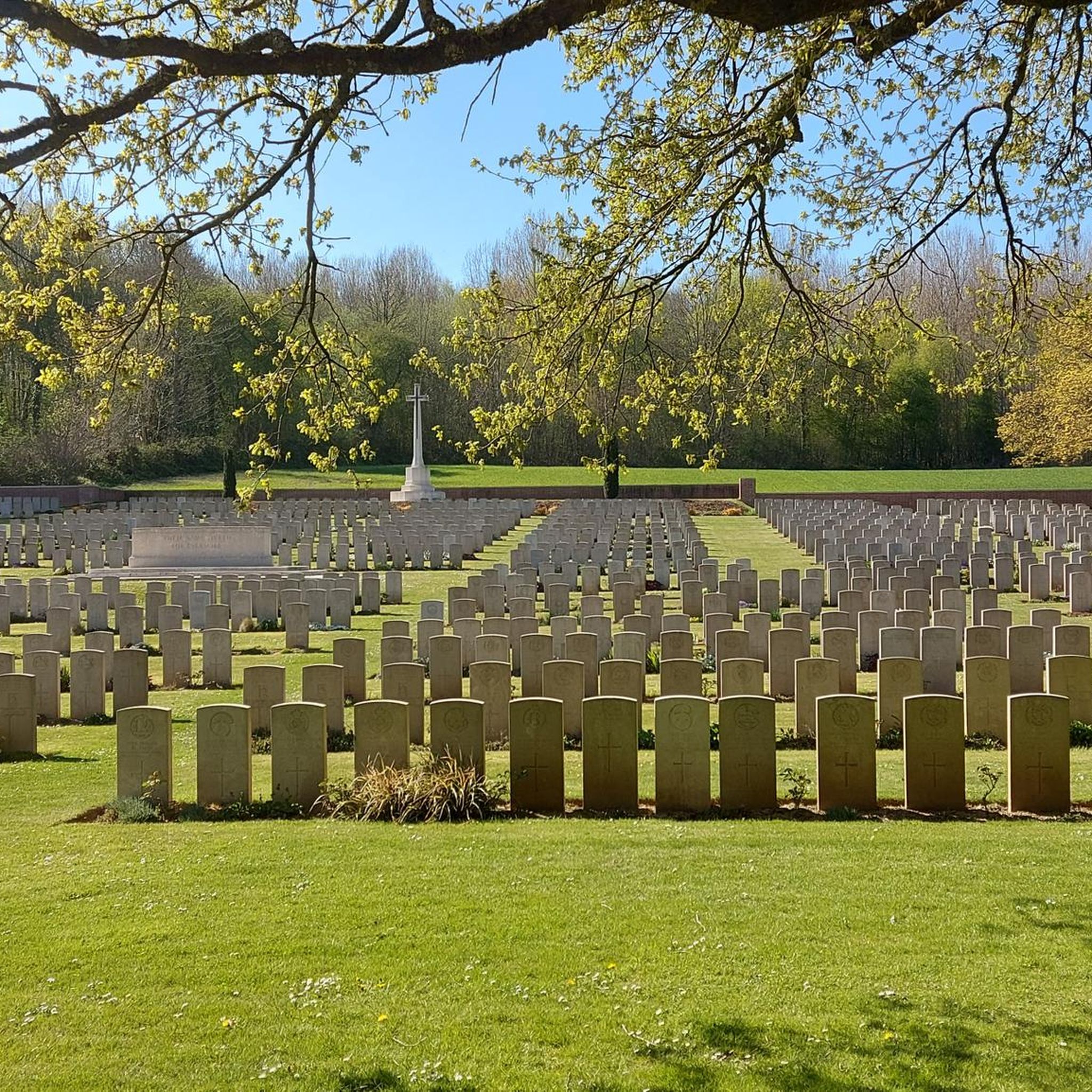
The cemetery's name, "Adanac," was formed by reversing the letters of "Canada" to honor the 1,078 Canadians buried there. There are now 3,187 Commonwealth and First World War commemorative graves in this cemetery, of which 1,709 are unidentified: 1,989 British, 1,074 Canadian, 70 New Zealand, 56 Australian, and 1 German. The village of Miraumont was occupied by British troops on February 24 and 25, 1917, following the German withdrawal to the Hindenburg Line. The village, recaptured by the Germans on March 25, 1918, was finally captured by the 42nd (East Lancashire) Division on August 24.
0
0
French politician, MP and then resistance fighter, born on November 6, 1890 in Bapaume, he became mayor of the city in 1929, in 1934, he was elected general councilor of Pas-de-Calais. In 1936, he ran in the legislative elections and was elected in the second round. He was arrested in 1943 by the Nazis when he left the prefecture, and deported to the Gross-Rosen camp where he died on November 27, 1944. Since 1948, a monument showing him at the time of his arrest honors his memory. At the Town Hall there is an urn with soil from Gross-Rosen as well as a painting representing him.
5
0
Frequently Asked Questions
How many road cycling routes are available around Bazentin?
There are over 160 road cycling routes around Bazentin, offering a wide range of options for different skill levels. This includes 45 easy routes, 115 moderate routes, and 6 more challenging options for experienced cyclists.
What is the typical terrain like for road cycling near Bazentin?
The terrain around Bazentin is characterized by rolling countryside with gentle gradients, making for accessible cycling. Routes often follow local and departmental roads, traversing a landscape rich in history, including woods and historical World War I sites. The Somme Valley provides diverse backdrops, from open fields to riverside paths.
Are there routes suitable for beginners or less experienced cyclists?
Yes, Bazentin offers 45 easy road cycling routes. An example is the Mémorial Crucifix Corner – Somme Trench Museum loop from Thiepval, which is 14.0 miles (22.5 km) and explores significant World War I memorials and museums.
Are there challenging routes for experienced road cyclists?
While the majority of routes are moderate, there are 6 routes classified as difficult for experienced road cyclists seeking a greater challenge. These routes typically feature more significant elevation changes or longer distances.
What historical landmarks can I explore while road cycling around Bazentin?
The region is steeped in World War I history. Many routes pass by significant sites such as the Lochnagar Crater, the Newfoundland Memorial, and the Thiepval Memorial. You can also visit the Somme 1916 Museum or the Beaumont-Hamel Newfoundland Memorial, which are within reach.
Are there scenic viewpoints or natural features to discover on these routes?
Yes, the Somme Valley provides diverse natural beauty. You can find routes that offer views of the valley, such as the Canal de la Somme Cycle Path – Saint-Léger Church loop from Carnoy-Mametz. The wider Somme region also features natural reserves like the Réserve naturelle de l'Étang Saint-Ladre and the Réserve naturelle des Marais d'Isle, which are great for nature observation.
When is the best time of year for road cycling around Bazentin?
The Somme region is generally pleasant for cycling from spring through autumn. The healthy, oxygen-rich air is highlighted as a benefit for visitors. Spring offers blooming landscapes, while autumn provides cooler temperatures and vibrant colors. Summer is also suitable, though it can be warmer.
Are there circular road cycling routes available around Bazentin?
Yes, many routes around Bazentin are designed as loops, allowing you to start and end in the same location. For example, the Suzanne Castle loop from Montauban-de-Picardie is a 29.3 miles (47.1 km) trail that takes you through the rolling countryside.
What do other road cyclists enjoy the most about road cycling in Bazentin?
The road cycling routes around Bazentin are highly rated by the komoot community, with an average score of 4.3 stars from over 38 reviews. Cyclists often praise the blend of historical exploration with scenic rides through the rolling countryside and along the Somme Valley.
Can I find cafes or pubs along the road cycling routes?
While Bazentin itself is a small village, the broader Somme region includes charming towns like Amiens and Peronne, which offer cultural stops and amenities such as cafes and pubs during longer cycling excursions. Many local villages along the routes will also have small establishments.
Are there any long-distance cycling routes that pass through or near Bazentin?
Yes, the Somme department is known for its cycling routes, including the 'Memory Cycle Route,' which spans 90km between Amiens and Arras. This route uses local and departmental roads, allowing cyclists to explore the Somme Valley and its cultural heritage, including significant World War I battlefields. You can find more information on the official tourism website: somme-tourisme.com.
Most popular attractions around Bazentin

Get inspired with the komoot mobile app


Explore more
Browse the best Road cycling routes in other regions.
