The best road cycling routes around Mont-Devant-Sassey
4.7
(30)
710
riders
131
rides
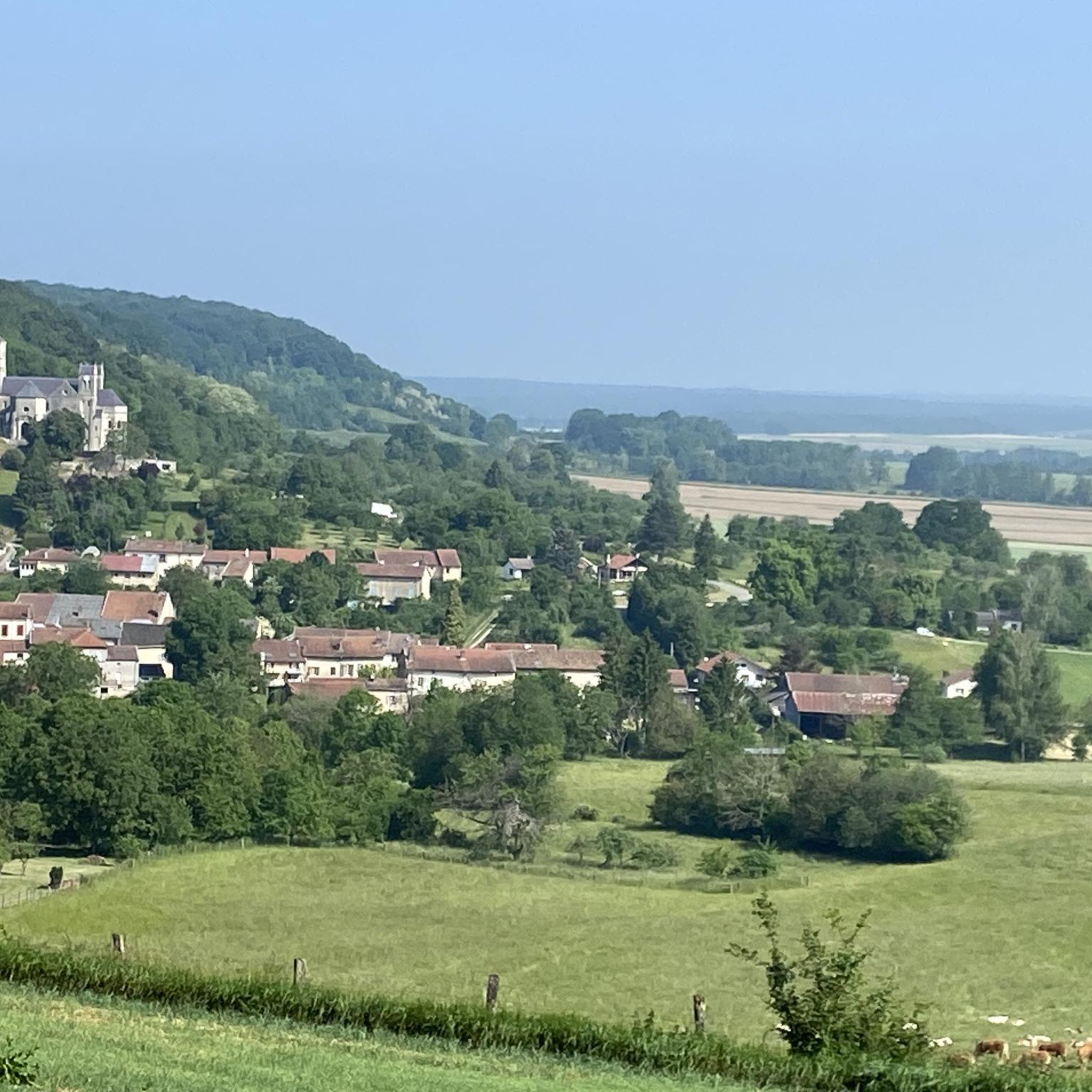
Road cycling routes around Mont-Devant-Sassey are situated within the Meuse department of France, characterized by gently sloping terrain and the scenic Meuse valley. The region offers access to well-established cycling paths, including sections of the EuroVelo 19 Meuse Cycle Route. Elevations in the broader area range from approximately 199m to 330m, providing a landscape with gentle inclines and descents. This environment is suitable for various levels of road cyclists seeking routes along the river and through rural areas.
Best road…
Last updated: July 2, 2026
5.0
(1)
57
riders
173km
08:29
1,070m
1,070m
Hard road ride. Very good fitness required. Some segments of this route may be unpaved and difficult to ride.
39
riders
230km
10:56
1,350m
1,350m
Hard road ride. Very good fitness required. Some segments of this route may be unpaved and difficult to ride.

Sign up for free
5.0
(1)
20
riders
177km
07:26
1,130m
1,130m
Hard road ride. Very good fitness required. Mostly well-paved surfaces and easy to ride.
18
riders
77.2km
03:26
580m
580m
Moderate road ride. Good fitness required. Mostly well-paved surfaces and easy to ride.
5.0
(1)
10
riders
95.0km
04:23
940m
940m
Hard road ride. Very good fitness required. Mostly well-paved surfaces and easy to ride.
Get access to more routes and recommendations from other explorers.
Sign up for free
Already have an account?
Our route recommendations are based on thousands of hikes, rides, and runs completed by other people on komoot.
Start today with a free account
Your next adventure awaits.
Login or Signup


Tips from the Community

Over a period of 22 years, from 1926 to 1948, a completely new abbey was built based on a design by architect Henri Vaes. This was primarily the work of Ghent native Albert-Marie Van der Cruyssen, who became the first abbot in 1936. On August 20, 1929, the foundation stone was laid in the presence of Prince Leopold and Cardinal Van Roey. The new abbey was completed in 1948. On June 5, 1939, the abbey church was consecrated and elevated to Basilica Minor by Pope Pius XII. On September 8, 1948, the abbey church and the completed cloister were solemnly consecrated by Cardinal Micara, who served as Apostolic Nuncio to Belgium from 1923 to 1946 and subsequently became Prefect of the Congregation for Rites. To finance the major construction projects, which by then had already cost tens of millions of Belgian francs, various fundraising activities were initiated. For example, special postage stamps with a surcharge were issued by the Belgian government. The cheese factory (1931) and the brewery (1932) were established to generate the necessary funds, and laypeople were employed from the outset. After the construction work was completed, these proceeds were used for social and charitable purposes. (Wikipedia)
12
0

The beautiful and strikingly modern town hall of the Mezières district. The adjacent forecourt was traffic-calmed a few years ago. There's also a drinking water fountain in the southwest corner of the square.
0
0

Built in the 14th century, the Avioth Basilica is distinguished by its rich Gothic-style decorations. It is also called the Cathedral of the Fields because of its natural setting.
0
0

A huge monument honoring the fallen soldiers in and around Verdun. From the top, there's a magnificent view of the city.
6
0

This monument was built in 1929 in the city centre. The 73 steps lead to a crypt where the names of the soldiers were recorded in the Verdun Medal. Above the 30-metre high tower is a tower that leads east and back east. This monument is a permanent feature of the city. Beneath the warrior's feet is a crypt that is accessible to the public. From there, a soldier can search or go to the Mediterranean (from April to November). On 1 November, a ceremony was held at the Victory Monument to welcome the Holy Land under the Arc de Triomphe in Paris. This ceremony is a reflection of the sacrifices of the warlords and the desire of the incredible soldier. The anonymous soldier was killed on 10 November 1920 in the underground citadel of Verdun. Source: Tourism Verdun
6
0

The Hôtel de Ville de Mézières, was rebuilt after the bombings of November 1918 and construction was completed in 1930. The facade of the building contains elements of medieval, Renaissance and Baroque architecture. The interior of the Town Hall reveals a neo-Baroque decoration. In 1966, the municipality of Charleville-Mézières was created by the merger of several municipalities, making the Hôtel de Ville de Mézières the town hall of Charleville-Mézières. The town hall is located on Place de l'Hôtel de Ville, which was completely renovated and modernized between 2018 and 2020. It is an impressive building that reflects Charleville-Mézières' status as a department capital.
10
0

A visit to the abbey is worthwhile. You should allow yourself about an hour and a half. Not far away there is a brasserie where you can try the cheese and beer.
6
0
Orval Abbey is a monastery of the Trappist Order (Cistercians of the Strict Observance) located in the municipality of Florenville in southern Belgium, near the French border. The name derives from the Basque ar(an) and French val (both meaning valley). The folk etymological interpretation of the French or (as golden valley) gave rise to a legend according to which a Countess Matilda (in some versions Matilda of Tuscany) lost her golden ring in the valley, which was then returned to her by a fish. She founded the monastery in gratitude. The Matilda Fountain can be visited in the ruins of the old monastery. (Wikipedia) Orval is a Trappist beer that has been brewed since 1932 in the Cistercian Abbey of Notre-Dame d'Orval in the Belgian province of Luxembourg. The bottle label and beer mat depict a trout with a golden ring in its mouth, illustrating the legend of the abbey's founding.
5
0
Frequently Asked Questions
How many road cycling routes are available around Mont-Devant-Sassey?
There are over 120 road cycling routes around Mont-Devant-Sassey, offering a wide range of options for different skill levels and preferences. The komoot community has explored these routes over 600 times, providing valuable insights.
What is the typical difficulty level of road cycling routes in this area?
The region offers a diverse range of routes. You'll find 18 easy routes, 94 moderate routes, and 15 difficult routes. The gently sloping terrain of the Meuse valley makes many routes accessible, while longer options provide more challenge.
What kind of terrain and elevation can I expect on road cycling routes around Mont-Devant-Sassey?
You can expect mostly gently sloping terrain, particularly along the scenic Meuse River. Elevations in the broader area range from approximately 199m to 330m, indicating a landscape with gentle inclines and descents. Many paths, especially those along the EuroVelo 19, are well-maintained and often asphalted with low traffic.
Are there any long-distance road cycling routes available?
Yes, Mont-Devant-Sassey is a notable point along the Meuse Cycle Route (EuroVelo 19), an international path. Routes like the Glide along the Meuse – Charleville-Mézières Town Hall loop from Dun-sur-Meuse, at 144.8 miles (233.1 km), offer extensive tours following the Meuse River. For more information on the EuroVelo 19, you can visit France Vélo Tourisme.
What are some notable landmarks or attractions I can see along the road cycling routes?
As you cycle, you can discover historical and natural features. In Mont-Devant-Sassey itself, the impressive 11th-century church, Notre-Dame de l'Assomption, is a cultural highlight. Nearby, you might encounter the Pershing Bridge of Dun-sur-Meuse or the Meuse-Argonne American Cemetery. The Path Along the Canal in Stenay also offers scenic views.
Are there any circular road cycling routes in the area?
Yes, many routes are designed as loops, allowing you to start and end in the same location. An example is the Abbatiale Notre-Dame de Mouzon – View on Beaumont-en-Argonne loop from Dun-sur-Meuse, which is a challenging 99.6-mile (160.2 km) route offering diverse scenery.
What do other road cyclists enjoy the most about road cycling in Mont-Devant-Sassey?
The area is highly rated by the komoot community, with an average score of 4.8 stars from more than 20 reviews. Reviewers often praise the scenic waterside paths along the Meuse River, the gently sloping terrain, and the overall rural charm that defines the cycling experience here.
Are there any moderate-difficulty routes that offer a good balance of challenge and scenery?
Absolutely. A popular moderate route is the Caure wood – Chemin forestier tranquille loop from Dun-sur-Meuse. This 77.2 km route takes you through tranquil forest paths, offering a pleasant ride without extreme elevation changes.
Can I find routes that combine cultural sights with natural beauty?
Yes, routes often pass through charming villages and near historical sites. For instance, the Orval Abbey and Brewery – Basilique d'Avioth loop from Dun-sur-Meuse is a challenging 94.8 km route that allows you to explore significant cultural landmarks while enjoying the regional landscape.
What is the best time of year for road cycling in Mont-Devant-Sassey?
The region's gently sloping landscapes and riverside paths are enjoyable throughout the warmer months. Spring, summer, and early autumn generally offer the most pleasant weather conditions for road cycling, allowing you to fully appreciate the natural beauty of the Meuse valley.
Are the cycling paths suitable for families?
While specific family-friendly routes are not detailed, the presence of gently sloping terrain and well-maintained, low-traffic paths, particularly along sections of the EuroVelo 19, suggests that many routes could be suitable for families seeking leisurely rides. It's always recommended to check individual route details for distance and specific conditions.
What kind of natural features can I expect to see while cycling?
The primary natural feature is the Meuse River, which offers continuous scenic waterside views. To the west, the Forest of Argonne provides a contrasting landscape with wooded trails. The overall region is characterized by picturesque, gently undulating landscapes and rural charm.
Most popular attractions around Mont-Devant-Sassey

Get inspired with the komoot mobile app


Explore more
Browse the best Road cycling routes in other regions.
