Top 9 Mountain Passes around Quérigut
Best mountain passes near Quérigut are found in the Ariège Pyrenees, a region known for its diverse natural landscape. This area offers access to various mountain passes, providing routes for cycling and hiking. Quérigut is situated in the Donezan region, characterized by its Pyrenean villages and natural environments. The passes in this area connect different valleys and plateaus, offering varied terrain.
Best mountain passes around Quérigut
- The most popular mountain pass is Pailhères Pass, a mountain_pass that ascends to…
Last updated: June 26, 2026
Pailhères Pass
Highlight • Mountain Pass
Translated by Google •
Tip by

Col de la Creu
Highlight • Mountain Pass
Translated by Google •
Tip by

Sign up now to discover places like this
Get recommendations on the best single tracks, peaks, & plenty of other exciting outdoor places.
Sign up for free
Col du Garavel (1256 m)
Highlight • Mountain Pass
Translated by Google •
Tip by

Col de Pailhères (Elevation 2,000 m)
Highlight • Mountain Pass
Translated by Google •
Tip by

Col de Jau
Highlight • Mountain Pass
Translated by Google •
Tip by

Sign up for free to discover even more mountain passes around Quérigut.
Sign up for free
Already have an account?
Start today with a free account
Your next adventure awaits.
Login or Signup

Tips from the Community

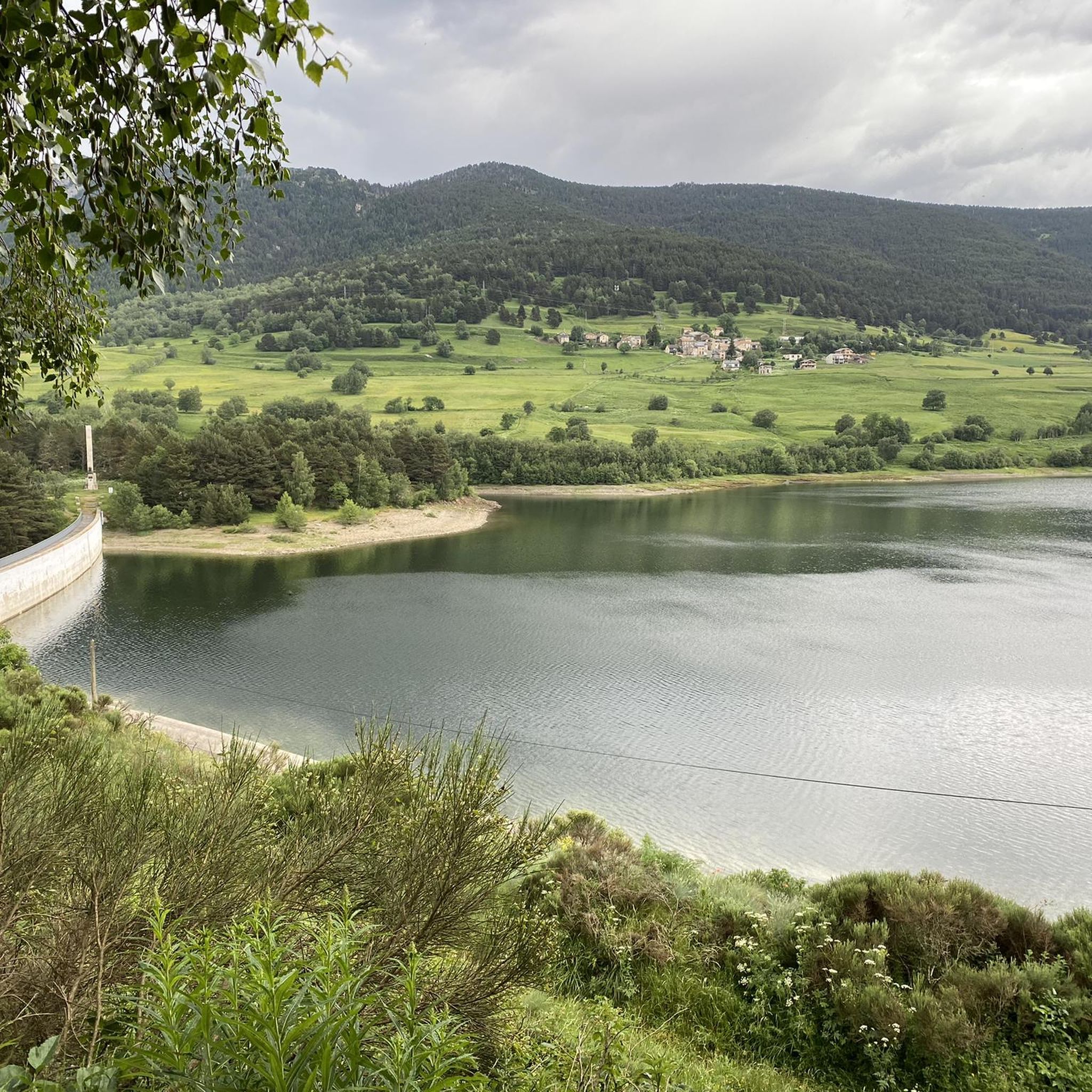
From Axat, it's a long climb, 18km. It's quite beautiful down in the gorges, then a few kilometers of fairly monotonous woods. Arriving on the plateau, it clears up but it's rural. The impressive view is worth it when you reach the pass. Going down there must be a blast, the tarmac is good, it's quite wide and there's little traffic. I went down via Escouloubre: the tarmac is bad, gravel, but the forest is enchanting! Why not go the other way, then, up via Escouloubre and down via Bousquet / Roquefort etc.?
1
0

It is a simply spectacular port that unites the regions of Conflent and Capcir. It is one of the most beautiful ports in the easternmost Pyrenees. It is very close to the Col de la Llosa, and you can take a circular route that is known as the "Route des Cols". It is also indicated on nearby road signs. The hardest slope is the one that begins in Olette (Conflent) and goes up through Aiguatèbia. There are almost 22 km of ascent and 1,089 meters of elevation gain. It has 3 very different zones: (1) the first is a constant 5 km at 7%; (2) the second is 10 km at 4% and with some very pleasant rest areas, with beautiful views; (3) The final part is 6 km on average at 7%, since it passes the town of Railleu, although the hard part is the last 3 km, with several ramps that exceed 10%. The road is narrow and has uneven asphalt, with hardly any cars and motorcycles. For me, the final part of this port is truly spectacular and should not be missed. The west slope begins in the town of Matamala (Capcir) and is 3 km with an average of close to 8%. It is a long irregular stretch along a narrow and very quiet road, with panoramic views of the valley when the thick black pine forest gives some opportunity.
0
0

A little disappointing: the pass is in the middle of the forest and offers no view. The climb from (and to!) Railleu is nevertheless superb. A nice picnic area to have a bite to eat.
1
0

One of the best experiences on my entire tour. I have this picture with the view of the mountains as my screen background. The roads are still closed, the snow is piled up meters high on the sides and at the same time there is not a single car on the road. Simply fantastic
1
0

Here you can barely reach the 2000m altitude. The area is wonderful
0
0
I have visited the Col de Pailhères on several occasions and in all seasons of the year. In summer it is very common to find cows, horses and sheep at the top. It is an enigmatic and wonderful port. It is very hard on both sides since it has many kilometers with a slope greater than 10%. It is one of my Top-10 in the Pyrenees. I leave you the link with its altimetry prepared by @cyclingcols --> http://www.cyclingcols.com/col/Pailheres
0
0

The Col de Pailhères, or Port de Pailhères, is one of the emblematic passes of the Pyrenees and the Tour de France. Culminating at 2,001 meters above sea level, it is one of the few passes in the Pyrenees to exceed the symbolic bar of 2,000 meters. The climb from Mijanès is 10.6 kilometers long with an average of 8.2%, including some passages at more than 10%. It is also possible to climb from Ax-les-Thermes by means of a climb of 18.6 kilometers with an average of 6.9%.
4
0

Great not so easy pass!
0
0
Frequently Asked Questions
What makes the mountain passes around Quérigut unique for cyclists?
The region offers a diverse range of cycling experiences. For instance, Pailhères Pass is an iconic Pyrenean climb, featured in the Tour de France, ascending to 2,001 meters with challenging gradients. Other passes like Col du Garavel (1256 m) provide more serene routes through typical Pyrenean villages with minimal traffic, ideal for a peaceful journey.
Are there any mountain passes suitable for hiking near Quérigut?
Yes, several passes offer excellent hiking opportunities. Pailhères Pass serves as a starting point for routes to Pic de Tarbésou and Étang Noir, offering magnificent panoramic views. The "Étang Bleu – Étang Noir loop" is also a popular mountaineering route from this pass. Additionally, Col de la Creu is part of a circular route known as the "Route des Cols" and offers fantastic views, including the majestic Canigó mountain.
What kind of views can I expect from the mountain passes in this region?
You can expect stunning panoramic views. From Pailhères Pass, you'll find 360-degree vistas, and from Col de la Creu, you'll get a fantastic view with the majestic Canigó mountain in the background. Even Col du Garavel (1256 m) offers impressive views of the surrounding Pyrenean landscape.
Are there family-friendly or easy mountain passes for beginners around Quérigut?
While some passes like Pailhères Pass are known for their challenging climbs, passes like Col du Garavel (1256 m) offer more secluded and peaceful natural landscapes with minimal traffic, which can be more approachable for those seeking a less strenuous experience. The route to Col d'Aspil is also part of a walking route exploring the Donezan villages, which can be tailored for various activity levels.
What is the best time of year to visit the mountain passes near Quérigut?
The summer months are generally ideal for visiting the mountain passes, especially for cycling and hiking, as the weather is more stable and the passes are clear of snow. During summer, it's common to see cows, horses, and sheep at the top of passes like Pailhères Pass. Some passes can be visited in other seasons, but conditions may vary, especially in winter when snow can make them inaccessible.
Can I find any cultural or historical significance among the mountain passes?
Yes, the region offers cultural insights. Col du Garavel (1256 m) winds through typical Pyrenean villages, offering a glimpse into local life. The Col de la Creu is located on the plateau of La Perxa in Northern Catalonia, connecting regions with distinct cultural identities. Col d'Aspil is specifically part of the "Tour of the Donezan villages," providing a route for cultural exploration of the unique charm of the area.
What outdoor activities, besides cycling and hiking, can I do near these mountain passes?
The area around Quérigut offers various outdoor activities. You can explore MTB Trails around Quérigut, with routes like the "Cascade du Galbe – Cascade sur le Galbe loop." There are also options for Gravel biking around Quérigut, including routes like the "Col de la Creu – Lake Matemale loop." For road cycling, you can find many Cycling routes around Quérigut, such as the "Pailhères Pass – Mijanès loop."
Are there any specific regulations or permits needed for hiking in the natural reserves near Quérigut's passes?
While the provided information doesn't detail specific permit requirements for hiking directly on the passes, it's always advisable to check with local tourist offices or park authorities for the latest regulations, especially if you plan to venture into designated natural reserves or protected areas within the Pyrenees Ariégeoises. This ensures you comply with any rules regarding access, camping, or dog-friendly policies.
What do visitors enjoy most about the mountain passes around Quérigut?
Visitors frequently praise the challenging yet rewarding climbs, especially on passes like Pailhères Pass, which is considered one of the most beautiful high mountain cycling experiences. The stunning landscapes, panoramic views, and the serene, secluded nature found on routes like Col du Garavel (1256 m) are also highly appreciated. The presence of local wildlife such as cows, horses, and sheep adds to the natural charm.
Is public transport available to reach the mountain passes near Quérigut?
The provided information does not specify direct public transport options to the mountain passes themselves. Most visitors typically reach these passes by car or bicycle. For detailed information on local transport, it is recommended to consult the Quérigut tourist office or regional transport services, as options can be limited in mountainous areas.
Can I find circular routes that incorporate these mountain passes?
Yes, circular routes are available. For example, the Col de la Creu is part of a circular route known as the "Route des Cols." Additionally, the "Étang Bleu – Étang Noir loop" is a moderate mountaineering route that begins from Pailhères Pass. For cycling, routes like the "Pailhères Pass – Mijanès loop" are also available, offering a full circuit experience.
Are there any hidden gem mountain passes near Quérigut that are less frequented?
While the main passes are well-known, Col du Garavel (1256 m) is appreciated for its serene environment and minimal traffic, winding through typical Pyrenean villages. This offers a more secluded experience compared to the more iconic climbs, making it a good option for those seeking tranquility and beautiful natural landscapes away from the crowds.
Most popular routes around Quérigut
Most popular attractions around Quérigut

Get inspired with the komoot mobile app


Explore more
See even more epic mountain passes by checking out these guides around Quérigut:
