The best MTB trails around Bérou-La-Mulotière
4.8
(13)
90
riders
14
rides
Mountain bike trails around Bérou-La-Mulotière offer a diverse landscape for outdoor activities. The region, part of the Eure-et-Loir department, features tranquil countryside with lush forests, expansive fields, and winding rivers. This varied terrain provides suitable conditions for mountain biking, with routes often leading through shaded paths and alongside waterways. The area's gentle hills and natural features contribute to a network of trails for different skill levels.
Best mountain bike trails around Bérou-La-Mulotière
- The most popular mountain bike trail is Bois…
Last updated: July 9, 2026
4.7
(7)
26
riders
Easy mountain bike ride. Great for any fitness level. Suitable for all skill levels.
10
riders
Moderate mountain bike ride. Good fitness required. Suitable for all skill levels.

Sign up for free
4.3
(3)
20
riders
56.9km
04:09
380m
380m
Moderate mountain bike ride. Good fitness required. Advanced riding skills necessary.
5.0
(1)
11
riders
25.3km
02:02
280m
280m
Moderate mountain bike ride. Good fitness required. Advanced riding skills necessary.
5.0
(1)
5
riders
28.2km
02:17
230m
230m
Moderate mountain bike ride. Good fitness required. Advanced riding skills necessary.
Get access to more routes and recommendations from other explorers.
Sign up for free
Already have an account?
Our route recommendations are based on thousands of hikes, rides, and runs completed by other people on komoot.
Start today with a free account
Your next adventure awaits.
Login or Signup



Tips from the Community

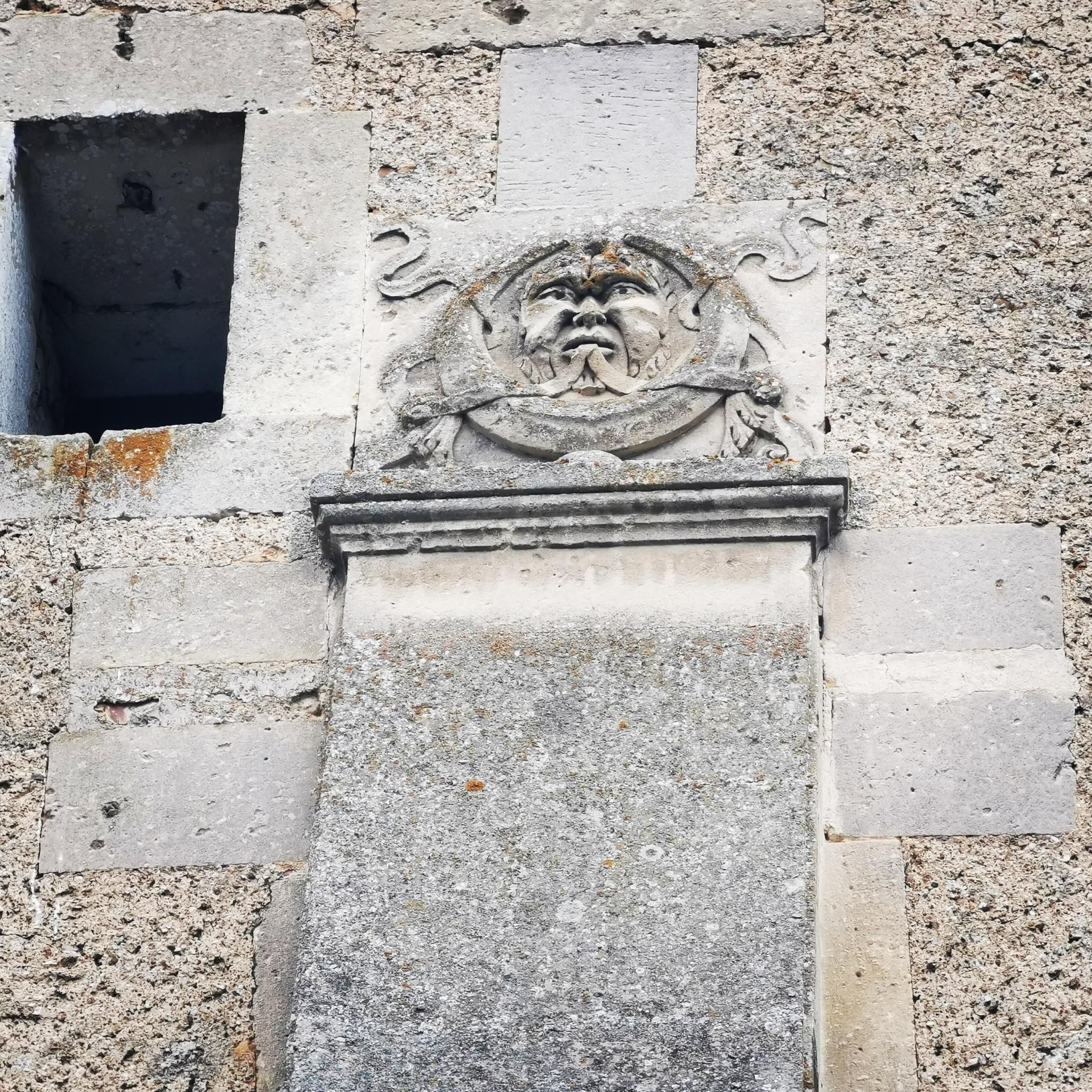
The church dedicated to Saint Christopher was under the patronage of the Abbey of Saint-Père de Chartres in the 12th century. Of Romanesque origin, the building was extensively enlarged and remodeled during the 16th and 19th centuries; it is currently undergoing a general restoration. This church owes its fame to the automobile pilgrimage held on the last Sunday in July. The single-aisled building, preceded by a porch, consists of a nave and a choir with a recessed flat chevet. To the south are the bell tower and a chapel. The use of traditional materials in this part of Normandy—flint and grison, a locally quarried ferruginous stone—indicates that the oldest parts of the building are of medieval origin. The nave is built of rubble masonry (grison and flint) set in mortar. In dressed stone, Grison was used to form, on one side, the corners of the exposed gable of the nave and, on the other, the corner buttresses, to frame the small arched openings, since walled up but still visible on the north and south walls, as well as the pointed arch of the portal. The same approach is found in the choir. The elevations are finished with a quarter-round cornice, part of which is also made of Grison stone. The use of brick corresponds to the 19th-century interventions, in two phases of work whose completion date is unknown. An examination of the construction reveals a first phase of repairs to the openings, particularly in the choir and nave, where large rectangular openings with curved lintels were created, the bricks of which are light in color. This was followed by further interventions with pointed arched openings framed in purplish brick, some of which replaced the rectangular openings of the previous phase. The porch features an ornate gable of light-colored, rendered brickwork, flanked by brick and chipped flint pilasters, and pierced by a central bay framed in brick and topped with a niche; the side sections are timber-framed on a masonry base. The southern flank of the building was added during the 16th century to a vast chapel and a bell tower, made of rubble blockwork, in which bays are pierced, framed in limestone, with curved profiles in the case of the bell tower. Restoration work has revealed several molded courses on the south face of the chapel, corresponding to a bay removed during later restorations, which confirm the dating of this part of the building. This chapel opens onto the nave through a large arcade adorned with several rows of moldings, resting on simple square piers devoid of decoration, with animal figures (reused?) at their bases, unearthed during the restoration work. The interior is remarkably simple, with whitewashed walls and geometric stained-glass windows. Only the choir is more ornate; its entrance is marked by a stone arch resting on hexagonal piers with historiated capitals, where a sculpted frieze of foliate ornaments, figures, and a coat of arms unfolds. The church has a painted faux-marble altarpiece, above which are visible traces of incomplete wall paintings depicting draperies. The rafter frame forming a truss was straightened and reinforced by restoring the removed or weakened kingposts and tie beams. According to tradition, the carpenters left the mark of their work by sculpting a scalloped ... The bell tower's belfry has also undergone a complete restoration. For this restoration, designed to strengthen the church and enhance its architecture, the Sauvegarde de l'Art Français (French Art Protection Agency) granted €10,000 in 2005.
0
0

Église Saint Madeleine is a church where beautiful various statues of Saints, famous and less famous. The reason for so many different statues is that the school of sculpture was established here.
0
0

A beautiful spot to visit.
0
0

If you are looking for a mysterious and intriguing destination for your next stroll, you can visit Le dungeon apocryphe, a solitary tower that stands in the middle of the valley in Saint-Germain-sur-Avre. This tower dates from the 12th century and was part of a fortified castle which was destroyed during the Hundred Years' War. The origin and function of this tower are still unknown, and some legends say that it was built by the devil himself.
3
0
Château des Bois Francs, in Normandy, is a 19th century castle surrounded by 310 hectares of forest and 15 hectares of lakes. You can admire the architecture of the castle, the French gardens and the wildlife that inhabits the region. Château des Bois Francs is an ideal place to relax and discover the beauty of the Normandy countryside.
2
0
This greenway is a former railway line that has been converted into an asphalt path for cyclists, roller skaters and walkers. It extends for approximately 9 km from Verneuil-sur-Avre to the Center Parc des Bois-Francs, a leisure resort with a lake and spa. Along the route, you can admire views of fields, forests and villages, and learn about the history and culture of the region thanks to the information panels.
2
0
The Avre Aqueduct is a 19th century water supply system that stretches over 100 kilometers from Rueil-la-Gadelière to Saint-Cloud and provided Paris with drinking water. Along the way, you can admire the impressive technical prowess of the aqueduct, such as the arcades above the Eure, the siphons through the valleys and the tunnels under the hills. One of the best places to see is near Saint-Rémy-sur-Avre, a charming town crossed by the river Avre and endowed with a rich heritage of churches, castles and bridges. You can follow the marked path that will take you to Escorpain, where you can see the work of Tue-Cheval, one of the most remarkable parts of the aqueduct.
2
0

The church was rebuilt in the 16th century and then remodeled in the 18th and 19th centuries. History and important dates The church was rebuilt in the 16th century after being destroyed during the Hundred Years War. The nave was completed in 1514 and the choir around 1540.
0
1
Frequently Asked Questions
How many mountain bike trails are available around Bérou-La-Mulotière?
There are 14 mountain bike trails available around Bérou-La-Mulotière. These routes cater to various skill levels, from easy rides to more challenging paths, exploring the region's diverse landscapes.
What kind of terrain can I expect on mountain bike trails in Bérou-La-Mulotière?
The terrain around Bérou-La-Mulotière is characterized by tranquil and varied countryside. You'll find lush green forests, expansive golden fields, and sparkling rivers. Many paths lead through shaded woodlands and alongside waterways, offering a mix of natural surfaces.
Are there any easy mountain bike trails suitable for beginners or families?
Yes, there are 3 easy mountain bike trails around Bérou-La-Mulotière. A great option for a pleasant ride is the Bois Francs Greenway – Bois Francs Castle loop from Verneuil-sur-Avre, which is 17 km long and offers a gentle introduction to the local countryside.
What do other mountain bikers say about the trails in Bérou-La-Mulotière?
The mountain bike trails around Bérou-La-Mulotière are highly rated by the komoot community, with an average score of 4.9 stars from 8 reviews. Riders often praise the varied terrain, including quiet woodlands and scenic river paths, and the options available for different ability levels.
Are there any historical landmarks or attractions to see along the mountain bike routes?
Yes, the region offers several historical and cultural points of interest. For example, you might encounter the Escorpain Castle or the Gray Tower of Verneuil-sur-Avre. The Medieval town centre of Verneuil-sur-Avre and Nonancourt's historic center are also nearby, offering glimpses into the area's rich past.
Are there any longer, more challenging mountain bike routes for experienced riders?
Yes, there are 10 moderate and 1 difficult mountain bike trail for those seeking a greater challenge. A popular moderate option is the Le Gué de Philmain – ... loop from Verneuil-sur-Avre, which spans 43.3 km and explores more of the region's varied terrain, including forested sections.
Can I find circular mountain bike routes in the area?
Many of the mountain bike routes around Bérou-La-Mulotière are designed as loops, allowing you to start and finish at the same point. For instance, the Saint-Denis Church of Acon – Arm of the Avre loop from Nonancourt is a 52.6 km circular trail through the rural landscape.
What natural features can I expect to see while mountain biking?
Mountain biking in this region will take you through diverse natural settings. You'll ride alongside sparkling rivers, through lush green forests, and past expansive golden fields. The peaceful banks of the Eure River are a significant natural feature, teeming with aquatic life.
Is there a specific nature spot worth visiting near the trails?
Yes, the Étang de Bérou-la-Mulotière is a notable 'Big nature' spot. It features a nature trail with educational signs providing insights into local flora and fauna, including the southern damselfly, making it a great place to explore off the bike.
Are there other cycling opportunities in the wider Eure-et-Loir department?
Beyond Bérou-La-Mulotière, the broader Eure-et-Loir department is well-regarded for cycling. It features many cycle routes and tracks dotted around the countryside for both cycling and mountain biking adventures. You can find more information on the official tourism website: tourisme28.com.
What is a good moderate-difficulty route to explore more of the region?
For a moderate ride that covers a good distance and explores varied terrain, consider the Saint-Denis Church of Acon – Coastal departure KM104 loop from Tillières. This route is 25.3 km long and offers a rewarding experience through the local landscape.
Are there any routes that pass by the Avre river?
Yes, several routes in the area incorporate the Avre river. For example, the Bridge over the Avre – Saint-Denis Church of Acon loop from Dampierre-sur-Avre is a 24.6 km moderate trail that will bring you close to this scenic waterway.
Most popular routes around Bérou-La-Mulotière
Most popular attractions around Bérou-La-Mulotière

Get inspired with the komoot mobile app


Explore more
Browse the best MTB trails in other regions.
