The best road cycling routes around Mézières-Au-Perche
4.4
(18)
246
riders
134
rides
Road cycling routes around Mézières-Au-Perche traverse the gently rolling countryside of Eure-et-Loir, offering a mix of open agricultural landscapes and forested sections. The region is characterized by its low-traffic roads and varied elevation profiles, suitable for different skill levels. Cyclists can expect to encounter small hills and scenic rural vistas throughout their rides.
Best road cycling routes around Mézières-Au-Perche
- The most popular road cycling route is In the heart of Eure-et-Loir — sport circuit starting from Illiers-Combray — Parc du…
Last updated: July 15, 2026
Hard road ride. Very good fitness required. Mostly well-paved surfaces and easy to ride.
17
riders
60.2km
02:27
300m
300m
Moderate road ride. Good fitness required. Mostly well-paved surfaces and easy to ride.

Sign up for free
14
riders
66.1km
02:39
330m
330m
Moderate road ride. Good fitness required. Mostly well-paved surfaces and easy to ride.
7
riders
112km
04:55
1,030m
1,030m
Hard road ride. Very good fitness required. Mostly well-paved surfaces and easy to ride.
6
riders
51.1km
02:08
280m
280m
Moderate road ride. Good fitness required. Mostly well-paved surfaces and easy to ride.
Get access to more routes and recommendations from other explorers.
Sign up for free
Already have an account?
Our route recommendations are based on thousands of hikes, rides, and runs completed by other people on komoot.
Start today with a free account
Your next adventure awaits.
Login or Signup


Tips from the Community

Magnificent ceiling with the possibility of lighting it up
0
0

Saint Mames was martyred in Cappadocia around 1274: local legend has it that a saint offers a helping hand to cross the Loir. On April 17, 1707, thunder struck the bell tower.
0
0


The Henri Ey Hospital Center is a departmental public health establishment, specialized in psychiatry, which provides a mission of prevention and reception, care, aftercare and reintegration in mental health in Eure-et-Loir. It provides care in adult, child and adolescent psychiatry, as well as a medico-social activity in the field of geriatrics and psychological and mental disabilities.
0
0
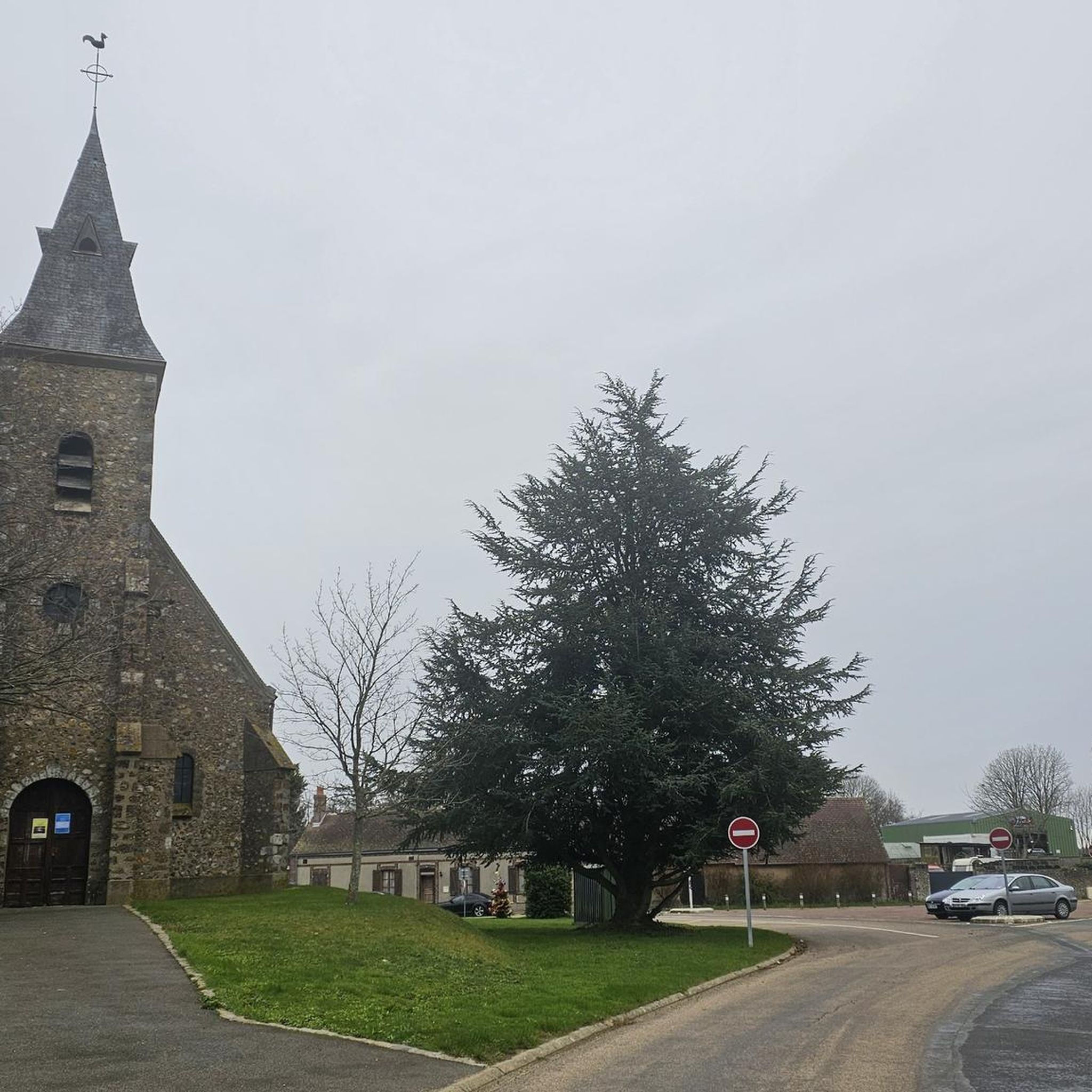
The Saint-Lubin church, built on a sloping site, is a vast building with juxtaposed constructions, bearing witness to renovations and additions up to the 19th century, the oldest distinguished by the presence of grison, the most recent by limestone and flint. The sanctuary was ceded in 1077 by the monks of Saint-Denis de Nogent-le-Rotrou to the monks of the Saint-Père de Chartres abbey. Built in the 11th-12th century, the nave extended by a semi-circular apse is the oldest part of the church, in Romanesque style. In the thickness of the north walls of the nave are still visible the grison bonds which bear witness to the original openings. The building was considerably enlarged in the 15th and 16th centuries by the construction of a large transept, formed of two chapels, and a south aisle forming an alignment of gables attached to the slopes decorated with leafy motifs and finished with chimeras. The construction of the north aisle, just begun, was not finished. On the outside, on the west wall of the chapel, we can see the beginning of a first bay (stone arch and walls removed that remained unfinished). On the gable of the north transept, the walled door can be seen from the pointed arch and the ornate pinnacles, characteristic of the end of the 15th century. In the center, two animals present a coat of arms. On each side of the door, niches with canopies once housed statues. Above, we can still see a coat of arms presented by two bearded figures and probably surmounted by God the Father. According to local tradition, all or part of the extensions were due to the generosity of Florimont Robertet, who owned the barony of Brou from 1509 until his death in 1527, and it was because of this that the work was interrupted. Occupied by the revolutionaries, the building became a ten-day temple in 1794; it was finally returned to worship in 1802. Burnt down by lightning in 1813, the upper part of the bell tower, which was a slender spire, was replaced by the construction of a square limestone tower pierced with louvers. On the southern part of the bell tower, a turret provides access to the bells. In the southern part of the nave, a door, now blocked and highlighted by a basket-handle arch topped with a pinnacle, provided access to the cemetery that once surrounded the church. The building can boast of having preserved very uniform oak furniture, most of which was made in the second half of the 18th century.
0
0
Between the green hills of Perche, the Saint-Denis church contains a 16th century baptistery listed as a Historic Monument. Explanatory plaque at the entrance. This church is Romanesque in style and has a rounded apse and a quadrangular bell tower. The baptismal font dates from the 16th century. The church is surrounded by walls made of Saint-Denis stone.
0
0
Bishop of Naples, he devoted himself to the service of the poor, helped his diocesans who were prisoners of the Saracens and restored liturgical worship in his Church. In Veroli in Latium, in 872, the death of Saint Athanasius, Bishop of Naples. He suffered greatly from his impious nephew, Serge, who chased him from his seat. Overwhelmed with grief, he passed from earth to heaven during his exile. The church was the chapel of the castle built by Rotrou III. The façade shows traces of the old bell tower-wall. It is supported by buttresses of grison which enclose a pointed arch; the upper part with the bays which contained the bells was removed in the 16th century. The windows are partly walled up. The walls of the nave and choir were paneled in the 18th century.
0
0
Frequently Asked Questions
What are the typical difficulty levels for road cycling routes around Mézières-Au-Perche?
The region offers a diverse range of routes. You'll find 52 easy routes, 71 moderate routes, and 6 challenging routes, catering to various skill levels. The terrain generally features gently rolling countryside with varied elevation profiles.
Are there challenging road cycling routes with significant elevation gain near Mézières-Au-Perche?
Yes, for experienced cyclists seeking a challenge, routes like In the heart of Eure-et-Loir — sport circuit starting from Illiers-Combray — Parc du Perche offer substantial elevation gain. This particular route covers 77.5 miles (124.7 km) with over 660 meters of ascent, traversing the Parc du Perche.
Where can I park my car when starting a road cycling tour in Mézières-Au-Perche?
Parking is generally available in the centers of the small towns and villages that serve as common starting points for routes, such as Illiers-Combray or Dangeau. Look for public car parks or designated street parking areas, which are usually free in these rural communities.
Are there beginner-friendly road bike trails in the Mézières-Au-Perche area?
Absolutely. The region has 52 easy routes that are suitable for beginners or those looking for a more relaxed ride. These routes typically feature gentler gradients and shorter distances, allowing for an enjoyable introduction to road cycling in the Eure-et-Loir countryside.
What is the best time of year for road biking in Mézières-Au-Perche?
The most pleasant times for road cycling are typically spring (April to June) and early autumn (September to October). During these months, the weather is generally mild, and the agricultural landscapes are at their most vibrant. Summer can also be excellent, but it's advisable to start earlier in the day to avoid the midday heat.
Are there family-friendly road biking options around Mézières-Au-Perche?
While dedicated family-specific routes are less common for road cycling, many of the 52 easy routes and some moderate ones can be suitable for families with older children who are comfortable on quiet country roads. The region is known for its low-traffic rural roads, which can enhance safety and enjoyment for family rides.
Are there scenic viewpoints or interesting landmarks along the road cycling routes?
Yes, the routes often pass through picturesque rural landscapes and charming villages. You might encounter historic churches like the Church of Saint James in Illiers-Combray or the Notre-Dame Church of Yèvres. The routes also offer views of the gently rolling agricultural plains characteristic of the Eure-et-Loir region.
Can I find circular road bike routes around Mézières-Au-Perche?
Many of the road cycling routes in the area are designed as loops, allowing you to start and finish in the same location. An example is the Illiers-Combray – The Eure at Ver les Chartre loop from Illiers-Combray, which offers a scenic circular journey through the Eure region.
What do other road cyclists enjoy most about road cycling in Mézières-Au-Perche?
The area is highly rated by the komoot community, with an average score of 4.6 stars from over 12 reviews. Cyclists often praise the quiet, low-traffic country roads, the charming rural scenery, and the varied terrain that offers options for different fitness levels, from gentle plains to sections with more significant climbs.
Are there road cycling routes with low traffic in the Mézières-Au-Perche area?
The region of Eure-et-Loir, particularly around Mézières-Au-Perche, is well-known for its extensive network of quiet, low-traffic rural roads. This makes it an ideal destination for road cyclists looking to enjoy peaceful rides away from busy urban areas, allowing for a more immersive experience in the countryside.
Are there any routes that pass by historical sites or castles?
Yes, some routes will take you past historical points of interest. For instance, the Château de Châteaudun – Saint-Valérien Church loop from Dangeau passes near the historic town of Châteaudun, which is home to a notable castle. You might also spot other smaller châteaux or historic churches along your ride.
What kind of landscapes can I expect to see on a road bike tour here?
Road cycling around Mézières-Au-Perche is characterized by rolling agricultural plains, vast open fields, and interspersed sections of woodland. You'll experience classic French rural scenery, with small villages, farmhouses, and the occasional river valley adding to the picturesque views.
Most popular attractions around Mézières-Au-Perche

Get inspired with the komoot mobile app


Explore more
Browse the best Road cycling routes in other regions.
