The best road cycling routes around Ouerre
4.4
(85)
992
riders
214
rides
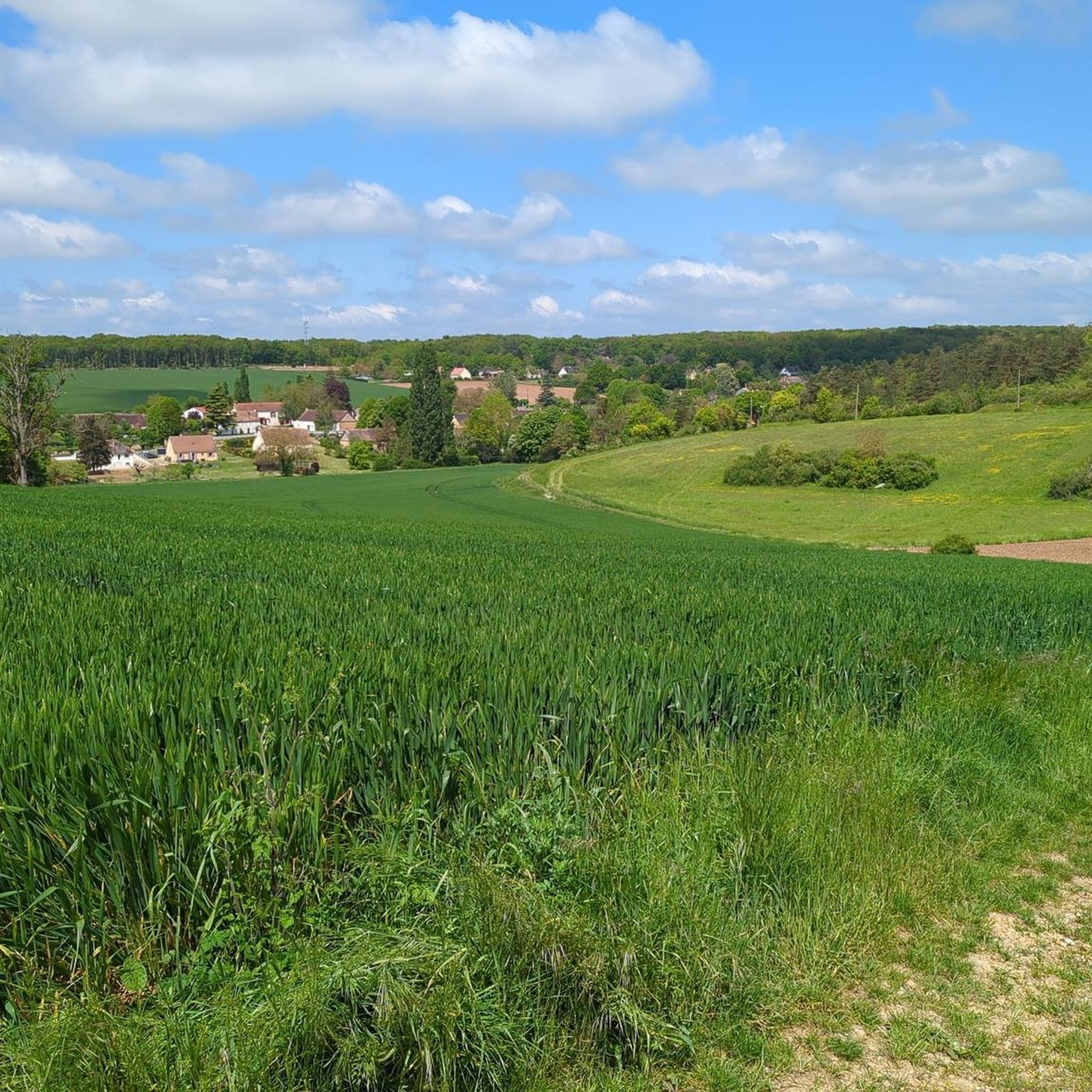
Road cycling around Ouerre, France, offers access to the diverse landscapes of the Eure-et-Loir department. The region features green landscapes, woodlands, and rolling green hills, providing varied terrain for cyclists. The Loir Valley, characterized by gently undulating lands with cereal crops, vineyards, and orchards, is also accessible. The area is known for its quiet roads, which contribute to a pleasant cycling experience.
Best road cycling routes around Ouerre
- The most popular road cycling route is Château de Mormoulins – Half-timbered…
Last updated: July 10, 2026
4.0
(1)
19
riders
48.2km
02:01
250m
250m
Moderate road ride. Good fitness required. Mostly well-paved surfaces and easy to ride.
4.0
(1)
6
riders
59.3km
02:19
200m
200m
Moderate road ride. Good fitness required. Some segments of this route may be unpaved and difficult to ride.

Sign up for free
3.3
(4)
8
riders
50.2km
01:58
190m
190m
Easy road ride. Great for any fitness level. Mostly well-paved surfaces and easy to ride.
9
riders
38.1km
01:32
180m
180m
Easy road ride. Great for any fitness level. Mostly well-paved surfaces and easy to ride.
6
riders
47.4km
01:58
210m
210m
Easy road ride. Great for any fitness level. Mostly well-paved surfaces and easy to ride.
Get access to more routes and recommendations from other explorers.
Sign up for free
Already have an account?
Our route recommendations are based on thousands of hikes, rides, and runs completed by other people on komoot.
Start today with a free account
Your next adventure awaits.
Login or Signup



Tips from the Community


The Moulin de Mormoulins is a watermill located on the Eure River in the hamlet of Mormoulins. This mill dates back to the 18th and 19th centuries and is a listed historical monument. You can admire the old stone building, the wooden wheel, and the canal that diverts water from the river as you pass in front of the mill. The mill is surrounded by green fields and trees, creating a peaceful and relaxing atmosphere.
0
0

Built in the 16th century and constructed from white stone from the Boncourt quarry, the church has a brown tile roof, accompanied by a bell tower and a belfry covered in slate. A small canopy, a vestibule, protects the sanctuary door, rebuilt in 1789. The bell was cast in the 17th century.
0
0
The construction of the original church of Sorel dates back to the 10th century. In 1113, this church was destroyed during the siege of the fortress of Sorel by the troops of Henry VIII of England coming from Normandy. Its identical reconstruction was unfortunately halted by a fire in 1134. The current church was rebuilt starting in the 13th century, with the chevet completed in the 15th century, and the first two bays of the nave and the northern seigneurial chapel in the 16th century. The bell tower was built in the 17th century by blinding a window. The building is constructed of flint, lime, and white stone on a sandstone base. The upper part is made of Vernon stone. The tiled roof is supported by a beautiful rafter frame whose tie beams are decorated with chimera heads, also called "howling devils." In the choir, the 19th-century altar recalls medieval sculptures. An interesting collection of stained-glass windows dating from 1850. After extensive renovations, masses have been celebrated again since 2007.
0
0


Very beautiful pond
0
0
Mentioned in 1159 as a possession of the chapter of Chartres, the oldest parts of the church of Saint-Léger, the nave and western façade, must date back to the 11th century. The nave, 15 m long and 7 m wide, is built from small rubble stones embedded in mortar. Only the corner quoins of the façade and the semicircular arch of the entrance door are made of dressed stone. In 1514, a larger choir (10 m X 10 m) finished by a flat wall, was added to the east. Some of its pointed arched bays have retained their beautiful tracery. The entire choir and nave are covered by a beautiful framework in the shape of an inverted hull. A significant decoration, created in the 18th century, woodwork, stalls, work bench, glory arch, lectern, and communion railing have been fortunately preserved. Traces of medieval wall paintings and a coat of arms were spotted on the walls, as well as ancient graffiti on the exterior. A 12th-century stone baptismal font and a 15th-century stone statue of Saint Léger are listed as Historic Monuments. A slate bell tower, topped with a slate spire, rises above the slightly recessed gable of the western façade. The Sauvegarde de l'Art Français (French Art Protection Agency) granted aid of 100,000 francs in 1992 and then 40,000 francs in 1993 for essential work on the framework and roof.
0
0
Frequently Asked Questions
How many road cycling routes are available around Ouerre?
There are over 220 road cycling routes available around Ouerre, offering a wide variety of options for different skill levels and preferences.
What kind of terrain can I expect when road cycling near Ouerre?
Road cycling near Ouerre offers a diverse landscape, primarily characterized by green landscapes, stunning woodlands, and rolling green hills. You'll find gently undulating lands with cereal crops, vineyards, and orchards, especially in the nearby Loir Valley. The region is known for its quiet roads, providing a pleasant cycling experience.
What do other cyclists say about road cycling in Ouerre?
The road cycling routes around Ouerre are highly rated by the komoot community, with an average score of 4.4 stars from over 70 reviews. Cyclists often praise the varied terrain, quiet roads, and the scenic beauty of the Eure-et-Loir department.
Are there road cycling routes suitable for beginners around Ouerre?
Yes, there are plenty of options for beginners. Over 100 easy road cycling routes are available around Ouerre. For example, the Avre Aqueduct – Cocherelle Dolmen loop from Villemeux-sur-Eure is an easy 49.9 km route that offers scenic views without significant elevation challenges.
Are there options for more experienced road cyclists looking for a challenge?
While the region is generally known for its rolling hills, there are routes that offer more challenge. There are 6 difficult routes available, and many moderate routes feature longer distances and more elevation gain. For instance, the Avre Aqueduct – Anet Castle loop from Mézières-en-Drouais is a moderate 54.1 km route with over 250 meters of elevation gain, leading through varied landscapes.
Are there any circular road cycling routes around Ouerre?
Yes, many of the road cycling routes around Ouerre are designed as loops, allowing you to start and end in the same location. Examples include the popular Château de Mormoulins – Half-timbered house loop from Charpont and the Cocherelle Dolmen – Avre Aqueduct loop from Villemeux-sur-Eure.
What historical landmarks or points of interest can I see along the road cycling routes?
The routes around Ouerre often pass by interesting historical sites. You can explore attractions like the Château de Mormoulins, the Donjon of Houdan, or the Nogent-le-Roi Castle. Some routes also feature the impressive Avre Aqueduct and dolmens like Cocherelle Dolmen.
Are there any long-distance cycling routes accessible from Ouerre?
Ouerre is strategically located within the Eure-et-Loir department, which hosts sections of significant long-distance itineraries. You can access parts of the Veloscenic (La Véloscénie), which crosses Eure-et-Loir via Chartres, and the Loir Valley by bike, offering extensive exploration opportunities.
Is the area around Ouerre suitable for family-friendly road cycling?
Yes, the region's emphasis on quiet roads and traffic-free trails, especially along sections of major routes like the Veloscenic, makes it suitable for family-friendly road cycling. There are over 100 easy routes that families can enjoy together, exploring the green landscapes and charming villages.
What is the best time of year for road cycling around Ouerre?
The Eure-et-Loir department generally offers pleasant conditions for road cycling from spring through early autumn. The 'green landscapes' and 'rolling green hills' are particularly vibrant during these seasons. Checking local weather forecasts before your ride is always recommended.
Are there cafes or places to stop for refreshments along the routes?
While specific cafes on every route are not detailed, the region is dotted with charming villages. Many routes pass through or near these villages, where you can typically find local establishments for refreshments. Planning your route with potential stops in mind is advisable.
What are the options for parking when road cycling in Ouerre?
As Ouerre is a commune in a rural department, parking is generally available in the villages and towns that serve as starting points for many routes. Look for public parking areas in places like Charpont, Villemeux-sur-Eure, or Mézières-en-Drouais, which are common starting points for local komoot tours.
Can I use public transport to reach road cycling routes near Ouerre?
While Ouerre itself is a smaller commune, the Eure-et-Loir department has a regional public transport network. For access to major cycling routes like the Veloscenic, you might consider reaching larger towns such as Chartres by train, and then cycling from there. Always check local transport schedules and bicycle policies in advance.
Are there any natural parks or protected areas to cycle through?
Yes, the Perche Regional Natural Park, located within the Eure-et-Loir department, offers scenic cycling opportunities. It features broad open moorlands, hedged farmland, rolling green hills, and wooded valleys, providing a beautiful backdrop for your rides.
Most popular attractions around Ouerre

Get inspired with the komoot mobile app


Explore more
Browse the best Road cycling routes in other regions.
