The best walks and hikes around Brie
4.4
(95)
392
hikers
64
hikes
Hiking trails around Brie traverse a landscape characterized by gentle, rolling terrain and historical sites. The region features a mix of open countryside, small water bodies, and areas of cultural significance. Elevation changes are generally minimal, making many routes accessible for various fitness levels. This area provides opportunities for exploring both natural and historical points of interest.
Best hiking trails around Brie
- The most popular hiking route is Historial of the Great War — loop from Péronne, a 5.4…
Last updated: June 26, 2026
4.1
(7)
17
hikers
8.74km
02:15
40m
40m
Moderate hike. Good fitness required. Easily-accessible paths. Suitable for all skill levels.
3.3
(4)
22
hikers
5.41km
01:24
30m
30m
Easy hike. Great for any fitness level. Easily-accessible paths. Suitable for all skill levels.

Sign up for free
4.3
(3)
10
hikers
4.99km
01:16
20m
20m
Easy hike. Great for any fitness level. Easily-accessible paths. Suitable for all skill levels.
5.0
(2)
9
hikers
10.6km
02:47
80m
90m
Moderate hike. Good fitness required. Easily-accessible paths. Suitable for all skill levels.
5
hikers
9.24km
02:24
60m
60m
Moderate hike. Good fitness required. Easily-accessible paths. Suitable for all skill levels.
Get access to more routes and recommendations from other explorers.
Sign up for free
Already have an account?
Our route recommendations are based on thousands of hikes, rides, and runs completed by other people on komoot.
Start today with a free account
Your next adventure awaits.
Login or Signup



Tips from the Community

Also a bicycle repair and electric bike charging point
0
0

The museum covers the period of the First World War in all its aspects: military, social, cultural.
0
0

Place of memory with a beautiful panoramic view.
0
0

This museum is located on the front lines of the Battle of the Somme. The white concrete design by architect Henri-Edouard Ciriani describes a gentle arc set into the southwest wall of the medieval castle. It forms a harmonious whole with the four large round towers, each with a diameter of 9 m. The building at the Etang du Cam stands on a series of smooth white concrete columns, creating a beautiful reflection in the water. The rooms are accessed through an opening in the wall of the 13th-century castle, which was built by the Counts of Vermandois. Charles the Bold imprisoned Louis XI in one of the towers.
2
0
This museum is located on the front line of the Battle of the Somme. The design in white beyon by architect Henri-Edouard Ciriani describes a gentle arch, incorporated into the southwest wall of the medieval castle. It forms a harmonious whole with the four large round towers with a diameter of 9 m. The building on the etang du Cam stands on a series of smooth white concrete columns, which results in a beautiful reflection in the water. The rooms are accessible through an opening in the wall of the 13th century castle, which was built by the counts of Vermandois. Charles the Bold locked Louis XI in one of the towers.
7
0

This wetland belongs to the inhabitants of the hamlet of Halles and is mainly composed of meadows grazed by horses. You will be able to admire the diversity of plants and animals that thrive in this humid environment, such as the obese-leaved waterwort, the reed conidium and the spotted newt. The Marais des Halles is also a site of historical interest, as it was the scene of fierce battles during the First World War. You can learn more about the history and ecology of this place by participating in guided tours organized by the Association for the Preservation of the Marais de Halles.
2
0
The Butte des Archers is a hill which offers a panoramic view of the city and its surroundings. The Butte des Archers was the site of a fierce battle during the First World War, when French and British troops defended the town against the German offensive in 1918. There you can see the remains of trenches, bunkers and craters, as well as a memorial in honor of fallen soldiers. La Butte des Archers is a place of memory and nature, where you can appreciate the beauty and tranquility of the landscape.
2
0
The Historial de la Grande Guerre is a museum dedicated to the First World War, located near the battlefields of the Somme in France. The museum's exhibits present the perspectives of the different countries involved in the war, as well as the lives of soldiers and civilians. It is also possible to enjoy the picturesque setting of the museum, which is housed in a castle overlooking a pond. You can stroll through the castle grounds, admire the architecture and gardens, and observe the flora and fauna. The museum is open daily from 9:30 a.m. to 6:00 p.m. (or 5:00 p.m. in winter).
4
0
Frequently Asked Questions
How many hiking trails are available in Brie?
Brie offers a diverse selection of over 50 hiking trails. These routes cater to various preferences, with 23 easy trails, 35 moderate options, and 1 more challenging route, ensuring there's something for every hiker.
Are there easy hiking trails suitable for beginners or families with children in Brie?
Yes, Brie features many easy trails perfect for beginners or families. These routes typically have minimal elevation changes and traverse gentle, rolling terrain. An excellent option is the Las Maison des Brocanteurs – Archers' Hill loop from Péronne, an easy 3.1-mile (5.0 km) path offering pleasant countryside views.
What kind of historical sites can I explore while hiking in Brie?
The Brie region is rich in history, particularly related to the Great War and medieval times. Many trails pass by significant landmarks. For instance, the Historial of the Great War — loop from Péronne explores historical sites around Péronne, including the Historial of the Great War – Château de Péronne.
Are there any circular walks in Brie?
Yes, many of the trails in Brie are designed as circular routes, allowing you to start and end at the same point. The Château de Péronne – Péronne loop from Péronne is a popular 8.9-mile (14.3 km) circular trail that takes you through historical townscapes and surrounding areas.
What do other hikers enjoy most about hiking in Brie?
The hiking experience in Brie is highly rated by the komoot community, with an average score of 4.3 stars from over 80 reviews. Hikers often praise the region's gentle countryside, the blend of historical sites with natural beauty, and the accessibility of routes for various fitness levels.
Are there any trails that offer views of water bodies or canals?
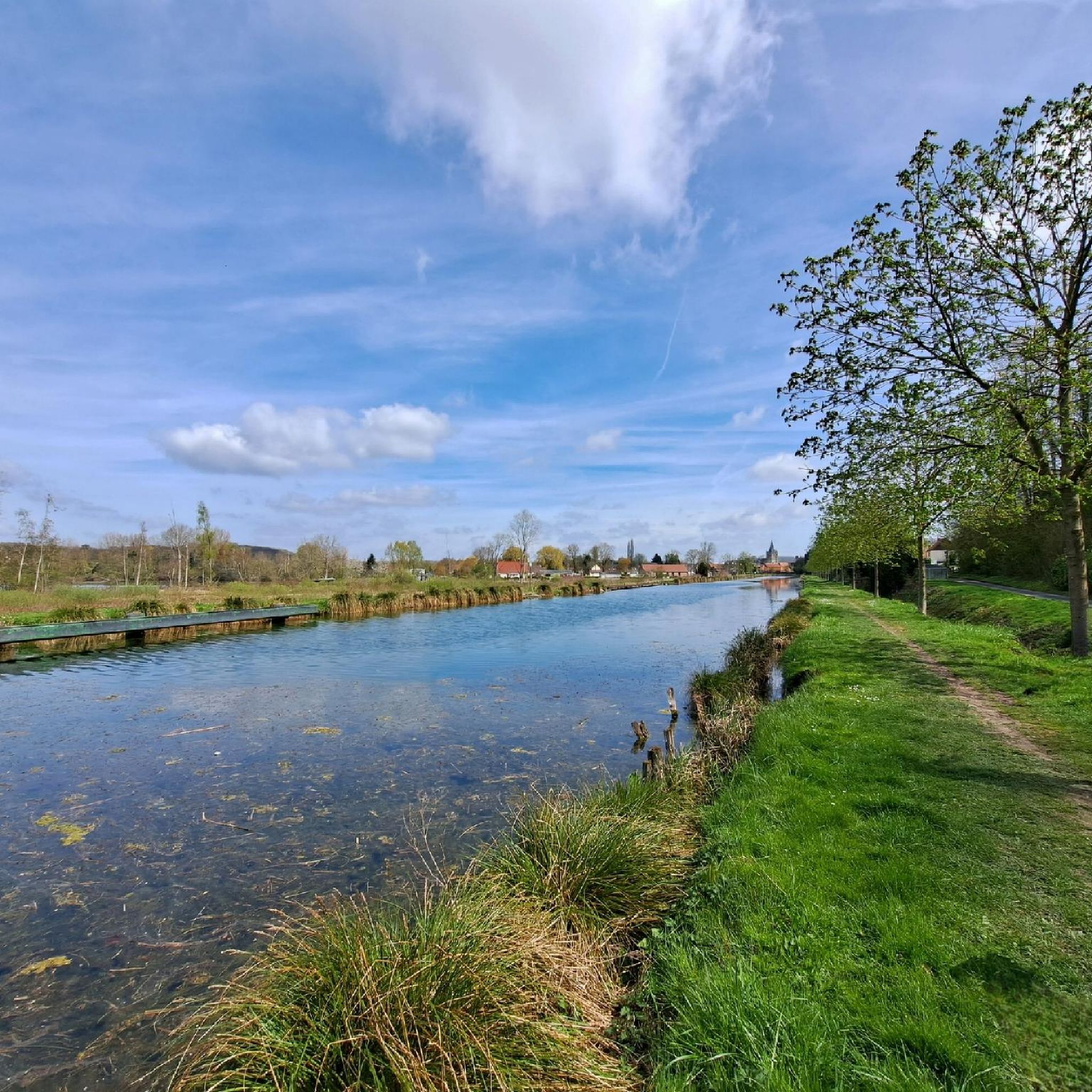
Yes, the region features small water bodies and canals that some trails follow or offer views of. The Canal du Nord is a notable waterway in the area, and some routes may offer glimpses of its serene waters.
What is the best season for hiking in Brie?
Given Brie's gentle, rolling terrain and minimal elevation changes, hiking is enjoyable across multiple seasons. Spring and autumn offer pleasant temperatures and beautiful scenery, with spring bringing lush greenery and autumn showcasing vibrant foliage. Summer is also suitable, though it's advisable to start earlier in the day to avoid the midday heat.
Are there any less crowded hiking options in Brie?
While some routes around Péronne are popular, Brie offers a wide network of trails. To find less crowded options, consider exploring routes slightly further afield from the main towns or trying trails during off-peak hours. The Vivier de l’Omignon loop from Athies is a moderate 6.6-mile (10.6 km) trail that might offer a quieter experience.
Are there any castles or châteaux to see along the hiking trails?
Absolutely. Brie is home to several historical castles. The Château de Péronne is a prominent landmark, and the Château de Péronne – Péronne loop from Péronne specifically leads through its vicinity. Another notable site is the Château d'Happlincourt, which can be explored in the wider region.
Is parking available at the trailheads in Brie?
Parking availability varies by trailhead. For routes starting in or near towns like Péronne, you can often find public parking areas. For more rural trailheads, roadside parking might be an option. It's always recommended to check specific route details or local signage for the most accurate parking information before your hike.
Can I access hiking trails in Brie using public transport?
Access to hiking trails via public transport in Brie can be limited, especially for routes in more rural areas. However, trails starting from larger towns like Péronne may be reachable by local bus services or regional trains. Planning your route in advance and checking local transport schedules is advisable.
Are there any short, easy loops suitable for a quick walk?
Yes, Brie offers several shorter, easy loops perfect for a quick stroll. The Hiking loop from Péronne is an easy 2.8-mile (4.5 km) route that can be completed in about 1 hour 10 minutes, providing a pleasant and accessible option.
Most popular attractions around Brie

Get inspired with the komoot mobile app


Explore more
Browse the best Hikes in other regions.
