Attractions and Places To See around Moriviller - Top 9
Best attractions and places to see around Moriviller are primarily found in the surrounding Meurthe-et-Moselle department of France. This rural commune serves as a starting point for exploring the Grand-Est region's historical, cultural, and natural features. The area offers a mix of natural landscapes, historical sites, and local points of interest within easy reach.
Best attractions and places to see around Moriviller
- The most popular attractions is Channel, a route that offers comfortable travel with scenic views, suitable for…
Last updated: July 1, 2026
Ponds of the Saussaie de Bayon
Highlight • Lake
Educational panels installed along the ponds reveal part of the local history.
Translated by Google •
Tip by

Channel
Highlight • Other
Translated by Google •
Tip by

Sign up now to discover places like this
Get recommendations on the best single tracks, peaks, & plenty of other exciting outdoor places.
Sign up for free
Moyen Castle
Highlight • Castle
Translated by Google •
Tip by

Adoménil Castle
Highlight • Castle
Translated by Google •
Tip by
Église Saint Martin
Highlight • Other
Showing Translation
Tip by

Sign up for free to discover even more attractions around Moriviller.
Sign up for free
Already have an account?
Start today with a free account
Your next adventure awaits.
Login or Signup




Tips from the Community

For several centuries, it was the old castle chapel that served as the parish church in Bayon. In 1865, Mgr Charles-Martial ALLEMAND-LAVIGNE, bishop of Nancy and Toul, moved by the advanced state of degradation of the chapel, which was threatening to collapse, urged the parishioners to raise a subscription for the reconstruction of a church worthy of a cantonal capital. It was not until 1879 that this subscription was set up by Abbé MICHEL, parish priest, and raised 101,022 F, distributed as follows: 76,022 F from subscriptions, 15,000 F donated by the church fabric, and 10,000 F by the Commune. The new church being estimated at 153,000 F, the difference was the subject of a subsidy request to the State and the Department. Work began in 1881. The new church was consecrated on September 24, 1884, by Mgr TURINAZ, bishop of Nancy and Toul. It is in the shape of a Latin cross and oriented to the West, opposite the previous church. In the Neo-Renaissance style, the building was designed by Mr. GIGOUT, architect, and built by Mr. JEUDY, contractor. In 1905, 21 years after its consecration, numerous defects were noted which compromised the structural stability of the building. The diagnosis established by the expert appointed by the Commune and the Prefect noted, among other things, the fall of a complete section of cornices onto the square, where children were playing. It also noted that vegetation was taking root and dislodging the stones. The installation of scaffolding to carry out the essential repairs allowed for a deeper diagnosis and revealed the "unheard-of" defects of the building. In October 1918, the sacristy was set on fire, as was part of the choir, where the tiling lifted in places. Cracks appeared in the transept and some plaster panels detached from the vault. In the inter-war period, the church underwent numerous repairs. On June 20, 1940, the church was hit by shell fire. The vault over the choir and the high altar were destroyed. The central vault was damaged. The lighting and the bells were put out of order. The bell tower, particularly targeted, was heavily damaged, as were the clock and the organ. From 1948 onwards, major renovations were financed thanks to "war damages". In 1952, the church was equipped with a sound system and the stained glass windows were restored. The following year, a new altar, designed by Abbé GUÉNAIRE and built by the THOMAS company of Bayon, was installed. In January 2012, following a negative opinion from the district safety commission, the church had to be closed to the public "as long as the stability of the bell tower was not assured". After very significant work was carried out, the building has welcomed the faithful again since May 2015. The Saint Martin church is 44.25 meters long, 18.25 meters wide, and originally housed 520 chairs (390 today). Its height is 15 meters under the vault and 18 meters under the dome. The spire soars to a height of 54 meters. By prefectural decree of March 28, 2012, the Saint-Martin church was entirely listed as a Historical Monument "as a representative example of Neo-Renaissance architecture in Lorraine and of the work of architect Léopold GIGOUT". It houses religious heritage which is also listed in the inventory of Historical Monuments but as "objects": a pietà and three 15th-century statues from the old church, as well as a deposition scene dating from the early 16th century and from the chapel of the Hospital.
0
0


The Château de Moyen is a 15th century fortress also known as the Château de Qui-qu'en-grogne. It was built by Conrad Bayer de Boppart, bishop of Metz, to defend his possessions against the Dukes of Lorraine. The castle was besieged and dismantled several times. Today it is partly restored and partly in ruins. You can explore the remains of the castle, such as the stately home, towers, walls and moat, and enjoy the panoramic view of the surrounding countryside. The castle is open to visitors from April to October, and you can also take part in guided tours or restoration workshops organized by a local association.
3
0
This castle is now a 4-star luxury hotel. A feast for the eyes during your visit or perhaps you will stop?
4
1

These municipal ponds are used for fishing. The place is quiet and shady, ideal for a break. Educational panels installed along the ponds reveal part of the local history.
7
0

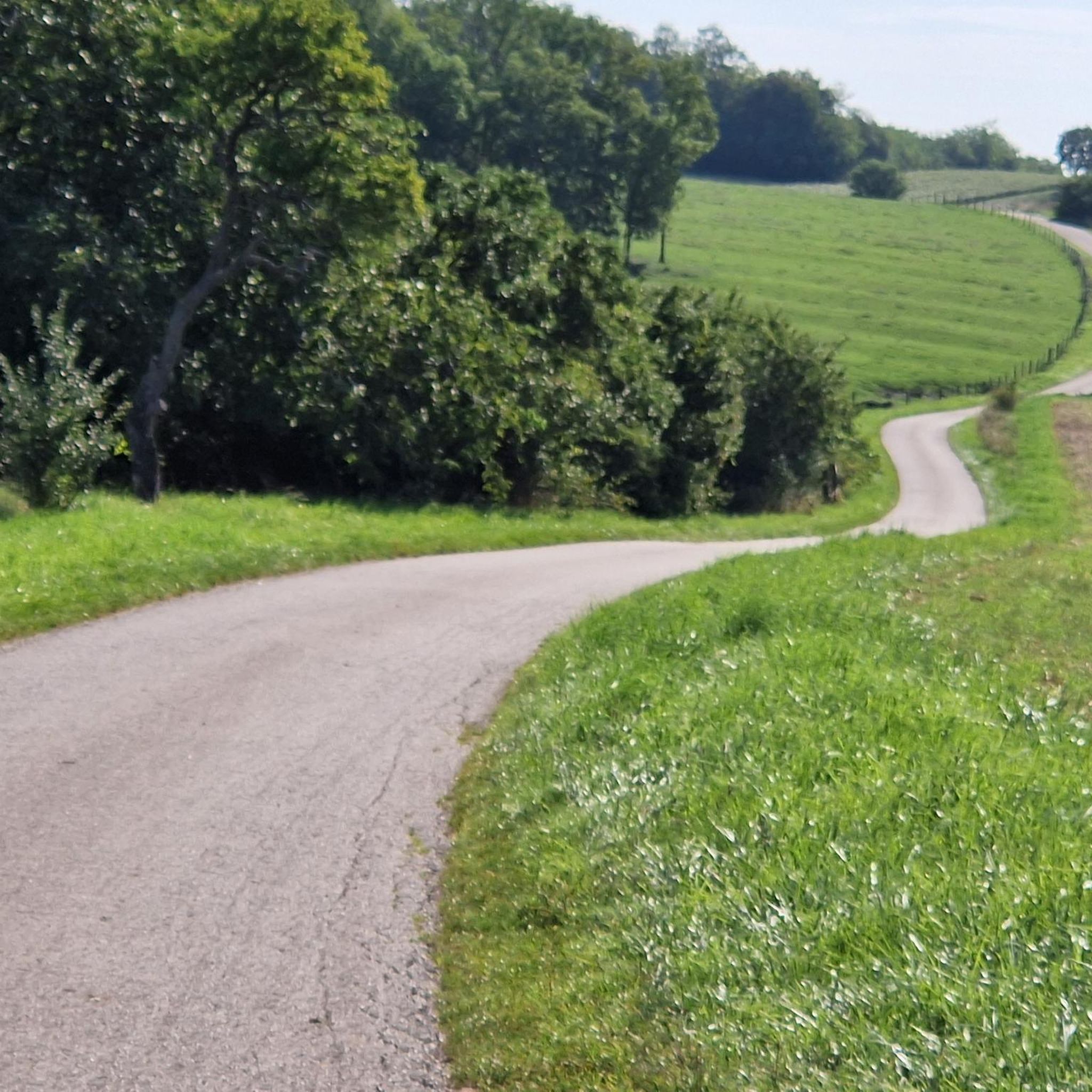
Magnificent course, well shaded in summer. Attention, it is Roville in front of Bayon
5
0

route along the canal easy and very pleasant
5
0

If you like old medieval castles, this is worth a look if you ride by it.
1
0
Frequently Asked Questions
What types of attractions can I find around Moriviller?
Moriviller is a great starting point for exploring a mix of historical, cultural, and natural attractions in the surrounding Meurthe-et-Moselle department. You can discover ancient castles, tranquil natural areas like ponds, and scenic routes for outdoor activities.
Are there any castles or historical sites to visit near Moriviller?
Yes, you can explore several historical sites. The 15th-century Moyen Castle, also known as the Château de Qui-qu'en-grogne, offers both restored and ruined sections with panoramic countryside views. Another notable site is the Adoménil Castle, which is now a luxury hotel, offering a beautiful sight. Further afield, Lunéville is home to the historic Château de Lunéville, and Nancy boasts the impressive architecture of Place Stanislas.
Where can I find natural beauty spots or outdoor areas for relaxation?
For natural beauty, visit the Ponds of the Saussaie de Bayon, a quiet and shaded lake area ideal for a break or fishing. The Parc romantique et Art Nouveau du château, just 5km from Moriviller, is a remarkable garden. You can also find natural beauty around Château de Moyen and Lindre. The Sensitive Natural Area of the Plain in Damelevières, a former meander of the Meurthe river, showcases diverse wetlands and is classified as a fishing reserve.
What outdoor activities can I do near these attractions?
The area around Moriviller offers various outdoor activities. You can enjoy cycling along the Channel, which provides comfortable travel with scenic views and few inclines. The Vélorail du Val de Mortagne in Magnières offers a unique 'pedalos on rails' experience. For fishing enthusiasts, Pêche la Gaule Gerbévilloise manages activities in the Mortagne river. You can also find numerous routes for cycling, hiking, and running.
Are there any family-friendly activities available?
Yes, families can enjoy the Vélorail du Val de Mortagne for a relaxing ride on an old railway line. The Ponds of the Saussaie de Bayon offer a peaceful setting for a break, with educational panels about local history. For animal lovers, the Parc animalier de Sainte-Croix, about 47 km away, is a zoo and wildlife park.
What can I explore in the nearby city of Nancy?
Nancy, approximately 31 km from Moriviller, is renowned for its impressive architecture, particularly Place Stanislas, a classified heritage site. The city also features the Muséum-aquarium de Nancy and offers guided audio tours to explore its historic monuments.
Are there any local markets in the vicinity of Moriviller?
Yes, several nearby towns host local markets. Lunéville has markets on Tuesdays and Saturdays, while Saint-Nicolas-de-Port holds one on Fridays. Other towns like Charmes, Dombasle-sur-Meurthe, Rambervillers, and Baccarat also have markets worth exploring.
What do visitors particularly enjoy about the attractions near Moriviller?
Visitors appreciate the comfortable travel and wonderful scenery offered by routes like the Channel, noting its few inclines make it great for biking. The Ponds of the Saussaie de Bayon are valued for their quiet, shaded environment and educational panels. The historical significance and panoramic views from Moyen Castle are also highly regarded.
Are there any unique natural viewpoints or geological features?
You can visit the Summit of the ancient volcano. After a short walk, you can admire the scenery and even look for pieces of basalt. The Moyen Castle also offers panoramic views of the surrounding countryside from its elevated position.
What can I find in the town of Lunéville?
Lunéville, approximately 13 km from Moriviller, is known for the historic Château de Lunéville. The town also hosts vibrant markets on Tuesdays and Saturdays, offering a taste of local life and produce.
Are there any equestrian activities in the area?
Yes, the Ecurie de l'Euron, located approximately 3 km from Moriviller in Remenoville, is an equestrian center. It offers riding lessons and horse boarding for those interested in horse-related activities.
What is the Sensitive Natural Area of the Plain?
The Sensitive Natural Area of the Plain in Damelevières is a significant ecological site. It's a former meander of the Meurthe river, showcasing diverse wetlands, including a forest of European interest, ponds, and reed beds. It's also classified as a fishing reserve during specific periods, offering a rich natural experience.
Most popular routes around Moriviller

Get inspired with the komoot mobile app


Explore more
Still not found the Highlight you’re looking for? See guides of the top attractions in other regions:
